A Levels Biology (9700)•9700/14/M/J/25
A Levels Biology (9700) — 9700/14/M/J/25, Question 38
Antibiotics are used to treat infections. Each antibiotic has one or more biochemical targets. Tetracycline inhibits 70S ribosomes. Rifampin inhibits prokaryotic RNA polymerase. Which antibiotic can be used to treat an infection caused by the influenza virus?
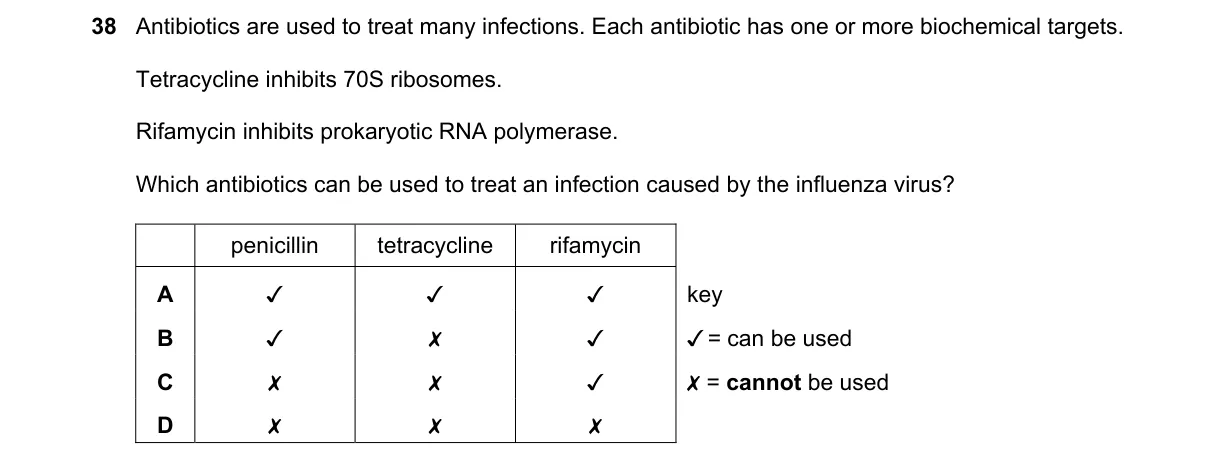
Answer choices
- Apenicillin
- Btetracycline
- Crifampin
- Dnone of the above
Explanation
Antibiotics target bacteria, not viruses
Steps:
- Recognize influenza as a viral infection, not bacterial.
- Note antibiotics like tetracycline and rifampin target prokaryotic (bacterial) structures: 70S ribosomes and RNA polymerase.
- Infer penicillin, a common antibiotic, also acts on bacteria (cell wall).
- Conclude no listed antibiotic affects viral replication.
Why D is correct:
- Antibiotics are defined as antimicrobial agents selective for bacteria; viruses lack prokaryotic machinery and require antivirals.
Why the others are wrong:
- A. Penicillin inhibits bacterial cell wall synthesis via peptidoglycan interference.
- B. Tetracycline blocks bacterial 70S ribosome function, halting protein synthesis.
- C. Rifampin binds prokaryotic RNA polymerase, preventing bacterial transcription.
Final answer: D
Topic: Antibiotics
Practice more A Levels Biology (9700) questions on mMCQ.me