A Levels Biology (9700)•9700/14/M/J/25
A Levels Biology (9700) — 9700/14/M/J/25, Question 19
A cell absorbs amino acids. This cell then synthesizes and exports a digestive enzyme. Different cell structures are involved with different stages of this process. Which row shows a possible sequence of cell structures that the amino acids pass through?
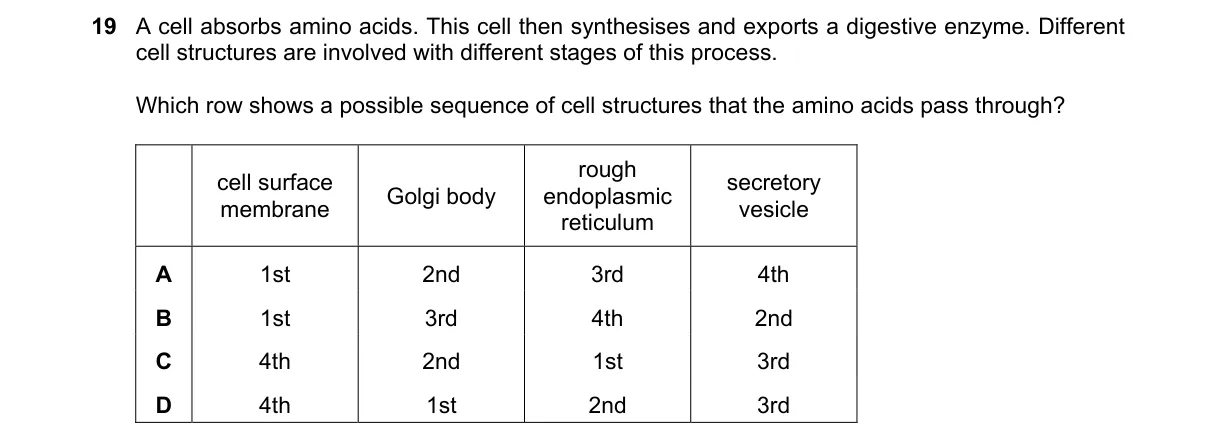
Answer choices
- Acell surface membrane, Golgi body, rough endoplasmic reticulum, secretory vesicle
- Brough endoplasmic reticulum, secretory vesicle, Golgi body, cell surface membrane
- Ccell surface membrane, secretory vesicle, Golgi body, rough endoplasmic reticulum
- DGolgi body, rough endoplasmic reticulum, secretory vesicle, cell surface membrane
Explanation
Protein Secretion Pathway in Eukaryotic Cells Steps:
- Amino acids enter the cell across the cell surface membrane via transport proteins.
- Ribosomes on the rough endoplasmic reticulum assemble amino acids into the polypeptide chain of the digestive enzyme.
- Transport vesicles move the protein from rough ER to the Golgi body for modification and sorting.
- The Golgi body packages the enzyme into secretory vesicles, which fuse with the cell surface membrane for export.
Why B is correct:
- Matches the endomembrane system pathway where proteins for secretion are synthesized in rough ER, processed in Golgi body, stored/transported in secretory vesicles, and released via cell surface membrane exocytosis.
Why the others are wrong:
- A: Places Golgi before rough ER, but protein synthesis must precede Golgi modification.
- C: Positions secretory vesicle before Golgi and rough ER last, reversing the synthesis-to-processing order.
- D: Begins with Golgi, ignoring that amino acid incorporation into protein starts at rough ER.
Final answer: B
Topic: Cells as the basic units of living organisms
Practice more A Levels Biology (9700) questions on mMCQ.me