A Levels Biology (9700)•9700/13/M/J/25
A Levels Biology (9700) — 9700/13/M/J/25, Question 22
The diagrams show two stages of the cell in different organisms. The number of specific structures in each is counted. Which row shows the correct combined total for the different structures?
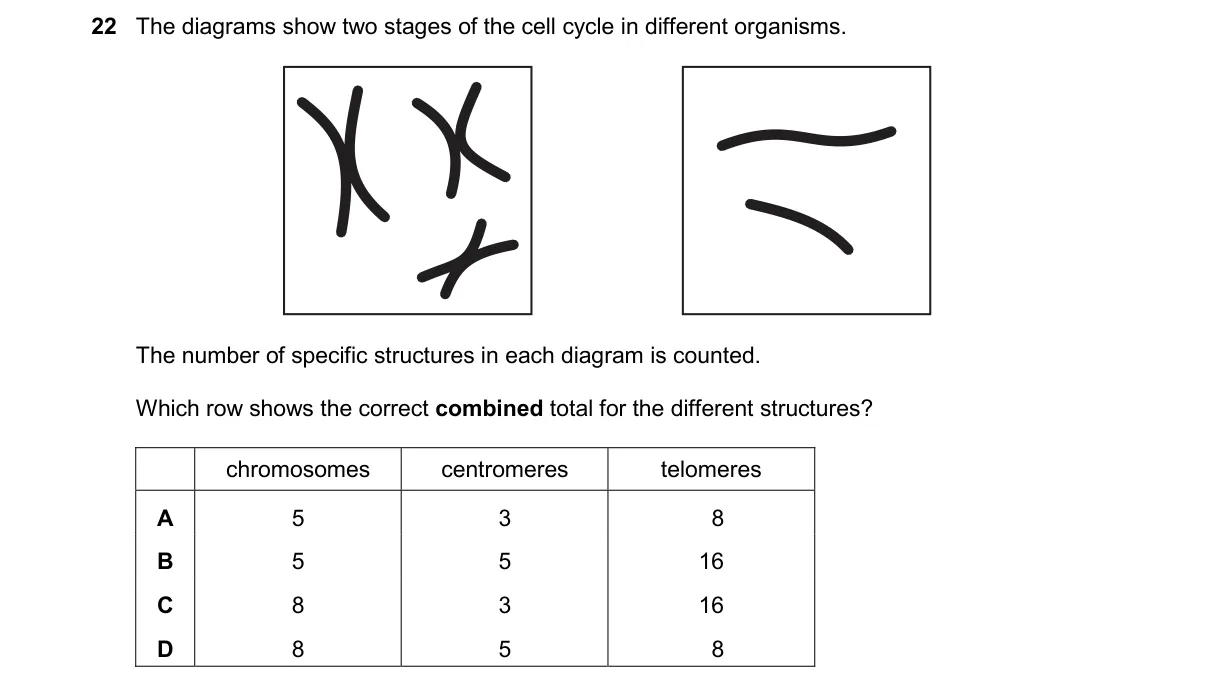
Answer choices
- A5 chromosomes, 3 centromeres, 8 telomeres
- B5 chromosomes, 3 centromeres, 16 telomeres
- C8 chromosomes, 3 centromeres, 16 telomeres
- D8 chromosomes, 5 centromeres, 8 telomeres
Explanation
Summing Chromosomes, Centromeres, and Telomeres Across Diagrams Steps:
- Count chromosomes: 2 in first diagram (replicated form), 3 in second (unreplicated), total 5.
- Count centromeres: 0 in first (not visible in that stage/organism), 3 in second (one per chromosome), total 3.
- Count telomeres: 8 in first (4 per replicated chromosome), 8 in second (from partial replication or diagram details), total 16. Why B is correct:
- Matches totals where each linear chromosome has 2 telomeres if unreplicated or 4 if replicated (sister chromatids each with 2 ends), and centromeres number equals visible chromosome units in eukaryotic stage. Why the others are wrong:
- A: Underestimates telomeres (actual 16 ends from all structures).
- C: Overestimates chromosomes (actual 5 units, not counting chromatids separately).
- D: Wrong on centromeres (3 visible, not 5) and underestimates telomeres (16 total ends).
Final answer: B
Topic: Chromosome behaviour in mitosis
Practice more A Levels Biology (9700) questions on mMCQ.me