A Levels Biology (9700)•9700/11/M/J/24
A Levels Biology (9700) — 9700/11/M/J/24, Question 37
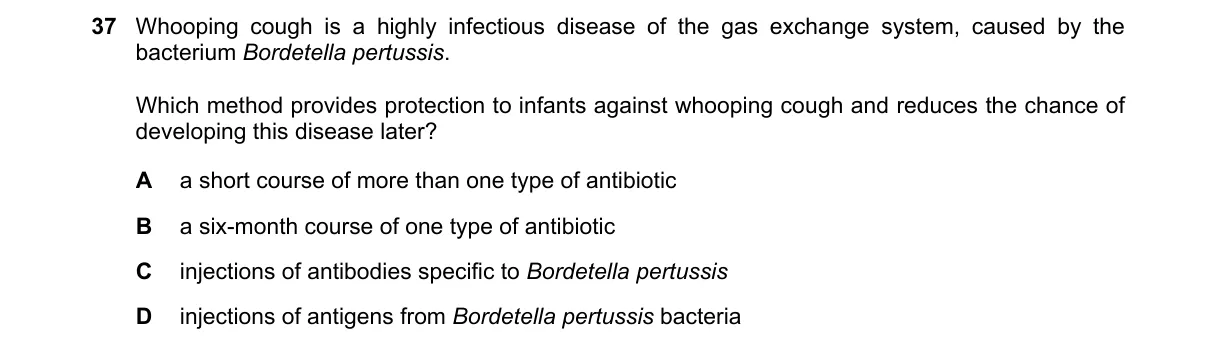
Which method provides protection to infants against whooping cough and reduces the chance of developing this disease later?
Answer choices
- Aa short course of one type of antibiotic
- Ba six-month course of one type of antibiotic
- Cinjections of antibodies specific to Bordetella pertussis
- Dinjections of antigens from Bordetella pertussis bacteria
Explanation
Vaccination induces active immunity against whooping cough
Steps:
- Whooping cough is caused by Bordetella pertussis bacteria, requiring preventive immunity for infants.
- Antibiotics treat existing infections but do not build long-term protection.
- Passive immunity from antibodies offers short-term defense without memory cell formation.
- Active immunity from antigens triggers the body's own antibody production and lasting protection.
Why D is correct:
- Injections of antigens from Bordetella pertussis act as a vaccine, stimulating the immune system to produce specific antibodies and memory cells for lifelong immunity, per immunological principles of vaccination.
Why the others are wrong:
- A: Short antibiotic course treats symptoms but provides no preventive or lasting immunity.
- B: Six-month antibiotic course manages infection but does not induce immune memory.
- C: Antibody injections deliver passive, temporary protection that wanes without reducing future disease risk.
Final answer: D
Topic: Antibodies and vaccination
Practice more A Levels Biology (9700) questions on mMCQ.me