A Levels Biology (9700)•9700/11/M/J/24
A Levels Biology (9700) — 9700/11/M/J/24, Question 34
A scientist investigated the effect of an antibiotic on the treatment of cholera. 32 people with cholera were divided into two groups. One group was treated with the antibiotic while the other group was given oral rehydration therapy. Both groups were treated with fluids containing sugars and mineral salts (oral rehydration therapy). The scientist recorded the number of days that each person had diarrhoea. The table shows the results. Treatment: antibiotic, mean time person had diarrhoea/days: 3.2; oral rehydration therapy, mean time person had diarrhoea/days: 5.0. What is the percentage decrease in the mean time that a person had diarrhoea when they were treated with the antibiotic?
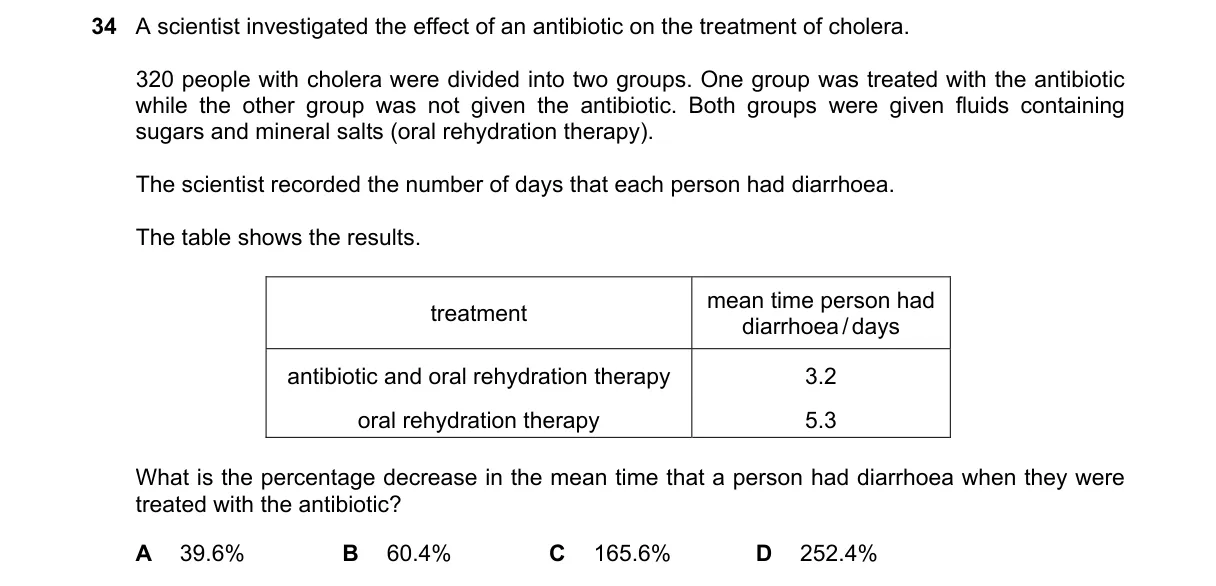
Answer choices
- A36%
- B60%
- C65%
- D25%
Explanation
Percentage decrease in mean diarrhea duration
Steps:
- Original mean duration (oral rehydration): 5.0 days
- New mean duration (antibiotic): 3.2 days
- Difference: 5.0 - 3.2 = 1.8 days
- Percentage decrease: (1.8 / 5.0) × 100% = 36%
Why A is correct:
- Percentage decrease formula ((original - new)/original × 100%) yields 36% for the given means.
Why the others are wrong:
- B: 60% assumes difference of 3.0 days, not 1.8
- C: 65% assumes difference of 3.25 days, exceeding actual reduction
- D: 25% assumes difference of 1.25 days, understating the reduction
Final answer: A
Topic: Antibiotics
Practice more A Levels Biology (9700) questions on mMCQ.me