A Levels Biology (9700)•9700/12/M/J/23
A Levels Biology (9700) — 9700/12/M/J/23, Question 31
Which statement supports the theory of active loading of sucrose into companion cells?
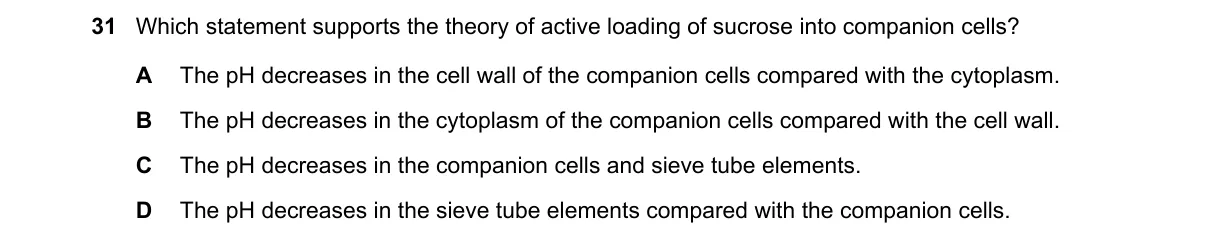
Answer choices
- AThe pH decreases in the cytoplasm of the companion cells compared with the wall.
- BThe pH decreases in the companion cells and sieve tube elements compared with the wall.
- CThe pH decreases in the wall of the companion cells compared with the cytoplasm.
- DThe pH decreases in the sieve tube elements compared with the companion cells.
Explanation
pH gradient drives active sucrose loading Steps:
- Proton pumps (H+-ATPase) in companion cell plasma membranes export H+ to the apoplast (cell wall), acidifying it.
- This establishes a pH gradient: lower pH (higher [H+]) in wall than in cytoplasm.
- Sucrose-H+ symporters use the H+ influx down this gradient to actively transport sucrose against its concentration gradient into companion cells.
- The correct statement reflects this wall-cytoplasm pH difference to support symport mechanism.
Why C is correct:
- It states pH_wall < pH_cytoplasm, creating the proton motive force for sucrose-H+ symport as defined in chemiosmotic transport theory.
Why the others are wrong:
- A: Reverses the gradient (pH_cytoplasm < pH_wall), preventing H+ influx needed for symport.
- B: Falsely lowers pH in both cell types versus wall and wrongly includes sieve elements, irrelevant to companion cell loading.
- D: Compares pH between sieve tubes and companion cells, not addressing the apoplast-cytoplasm gradient for loading.
Final answer: C
Topic: Transport mechanisms
Practice more A Levels Biology (9700) questions on mMCQ.me