A Levels Biology (9700)•9700/11/M/J/23
A Levels Biology (9700) — 9700/11/M/J/23, Question 34
A person with no breathing conditions rests for an hour. Their breathing in this time is shallow and slow, little air from outside the body reaches the alveoli. The person's heart rate remains constant.
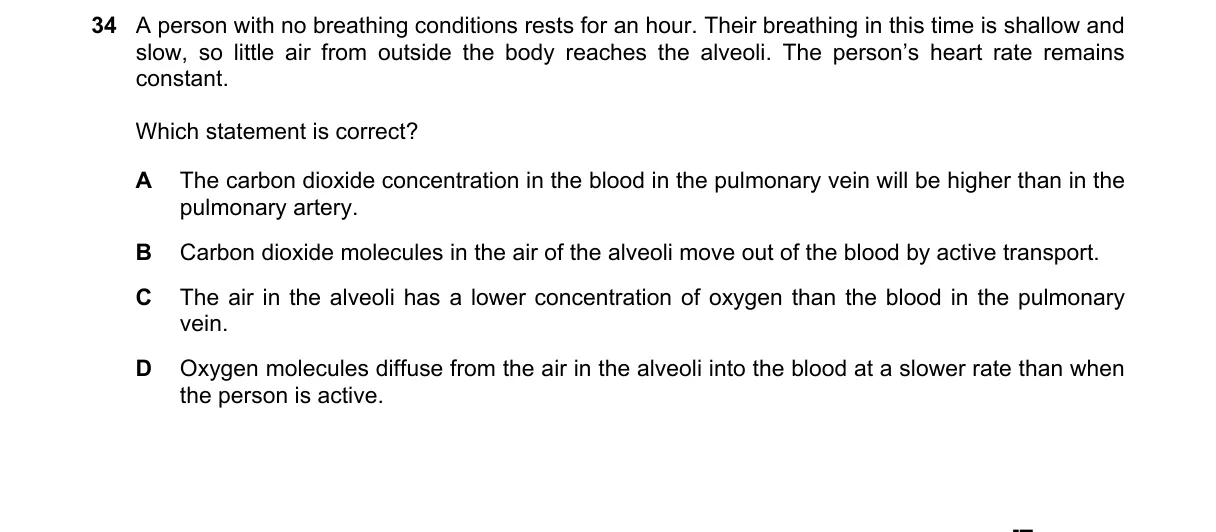
Answer choices
- AThe carbon dioxide concentration in the blood in the pulmonary vein is higher than in the pulmonary artery.
- BCarbon dioxide molecules in the air of the alveoli move out of the blood by active transport.
- CThe air in the alveoli has lower concentration of oxygen than the blood in the pulmonary artery.
- DOxygen molecules diffuse from the air in the alveoli into the blood at a slower rate than when the person is active.
Explanation
Gas Exchange During Shallow Breathing at Rest
Steps:
- Shallow, slow breathing limits fresh air to alveoli, reducing oxygen concentration there.
- This decreases the concentration gradient for oxygen diffusion from alveoli to blood.
- At rest, lower metabolic demand means slower oxygen use, but ventilation limits diffusion rate.
- During activity, deeper breathing increases alveolar oxygen, raising diffusion rate.
Why D is correct:
- Fick's law of diffusion states rate is proportional to concentration gradient; rest reduces alveolar O2 gradient versus activity.
Why the others are wrong:
- A: Pulmonary vein blood has lower CO2 than artery after gas exchange removes it.
- B: CO2 exits blood by passive diffusion down its gradient, not active transport.
- C: Alveolar air has higher O2 concentration than deoxygenated blood in pulmonary artery.
Final answer: D
Topic: The gas exchange system
Practice more A Levels Biology (9700) questions on mMCQ.me