A Levels Biology (9700)•9700/12/M/J/22
A Levels Biology (9700) — 9700/12/M/J/22, Question 39
A person's blood group is determined by antigens present on the red blood cells. The table shows the antigens and antibodies present in the blood groups A, B, AB and O. During a blood transfusion, it is essential that the person who receives the blood does not have antibodies to the donor's blood. Which blood groups can be given to a person with blood group B?
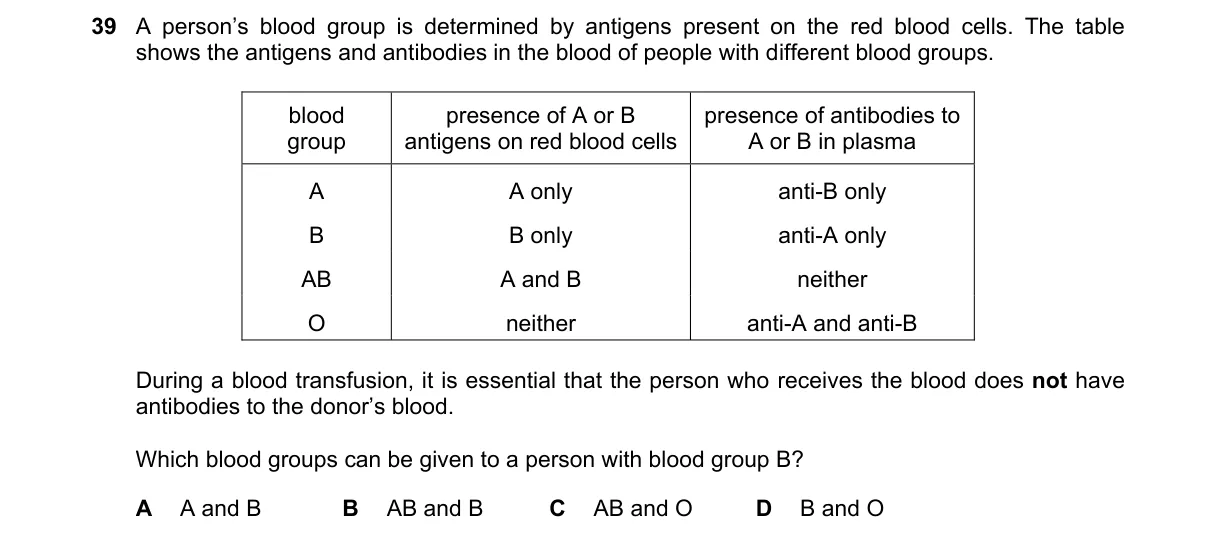
Answer choices
- AA and B
- BAB and B
- CAB and O
- DB and O
Explanation
Blood Compatibility for Group B Recipient
Steps:
- Identify recipient B's profile: B antigens on RBCs, anti-A antibodies in plasma.
- Determine donor compatibility: Donor RBCs must lack A antigens to avoid reaction with recipient's anti-A.
- Eliminate donors with A antigens: A (A antigen) and AB (A and B antigens) are incompatible.
- Confirm safe donors: B (B antigen only, no anti-B in recipient) and O (no antigens) work.
Why D is correct:
- B and O donors have no A antigens, preventing agglutination by recipient B's anti-A antibodies.
Why the others are wrong:
- A: Donor A has A antigens, attacked by recipient's anti-A antibodies.
- B: Donor AB has A antigens, triggering anti-A reaction.
- C: Donor AB has A antigens, causing incompatibility.
Final answer: D
Topic: Antibodies and vaccination
Practice more A Levels Biology (9700) questions on mMCQ.me