A Levels Biology (9700)•9700/12/M/J/22
A Levels Biology (9700) — 9700/12/M/J/22, Question 22
Rifampin is an antibiotic used to treat tuberculosis. It works by inhibiting RNA polymerase in bacteria. Which processes are directly inhibited by this antibiotic? 1. DNA replication 2. RNA synthesis 3. Protein synthesis
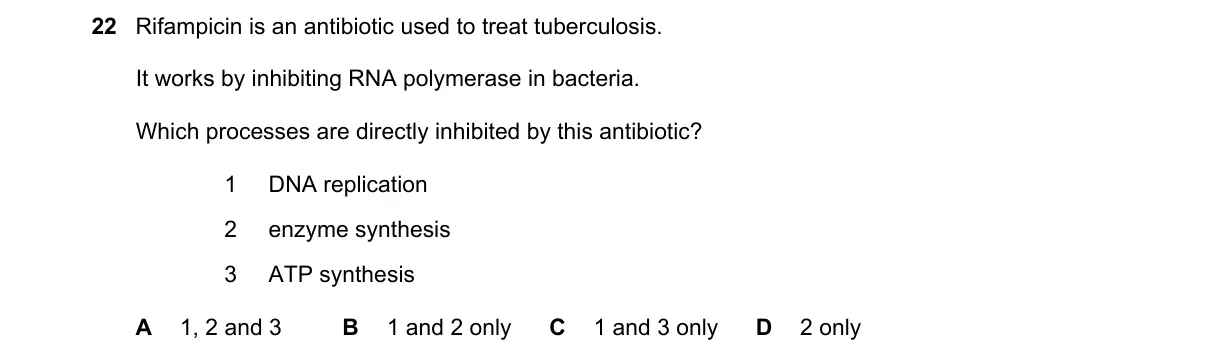
Answer choices
- A1, 2 and 3
- B1 and 2 only
- C2 and 3 only
- D2 only
Explanation
Rifampin's Targeted Inhibition of Transcription
Steps:
- Rifampin binds to bacterial RNA polymerase, blocking its function.
- RNA polymerase catalyzes transcription, the process of RNA synthesis from DNA.
- DNA replication requires DNA polymerase, unaffected by rifampin.
- Protein synthesis occurs at ribosomes using mRNA, indirectly impacted but not directly inhibited.
Why D is correct:
- RNA polymerase directly enables RNA synthesis (transcription), so its inhibition halts this process per the central dogma of molecular biology.
Why the others are wrong:
- A includes DNA replication and protein synthesis, both mediated by different enzymes.
- B includes DNA replication, which uses DNA polymerase, not RNA polymerase.
- C includes protein synthesis, which relies on translation machinery, not transcription.
Final answer: D
Topic: Antibiotics
Practice more A Levels Biology (9700) questions on mMCQ.me