A Levels Biology (9700)•9700/11/M/J/22
A Levels Biology (9700) — 9700/11/M/J/22, Question 20
Which statement about telomerase is correct?
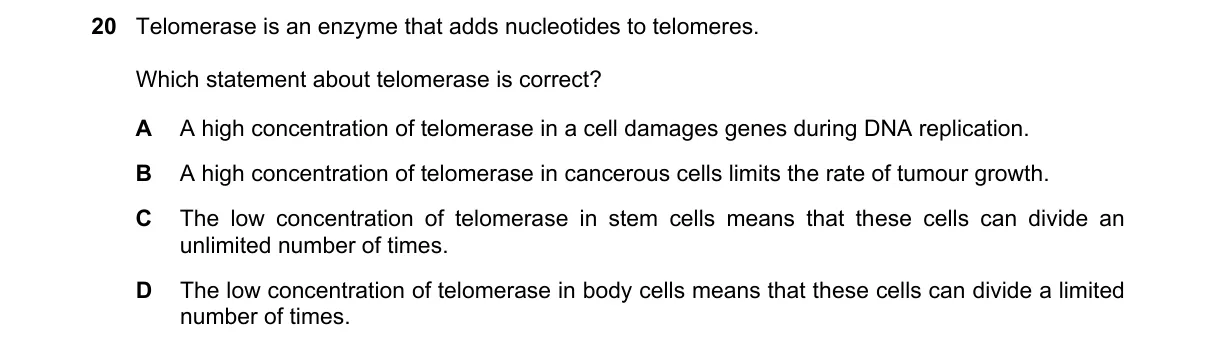
Answer choices
- AA high concentration of telomerase in a cell damages genes during DNA replication.
- BThe low number of telomerase in stem cells means that these cells can divide an unlimited number of times.
- CThe low concentration of telomerase in body cells means that these cells can divide a limited number of times.
- DA high concentration of telomerase in cancer cells means the rate of tumour growth
Explanation
Telomerase enables unlimited cell division in cancer
Steps:
- Telomerase adds telomeres to chromosome ends, countering shortening during DNA replication.
- Somatic cells have low telomerase, leading to telomere erosion and limited divisions (Hayflick limit).
- Stem and cancer cells express high telomerase, allowing persistent division.
- Evaluate statements: A misattributes damage to telomerase; B inverts stem cell telomerase levels; C correctly states somatic limits but overlooks cancer context; D links high telomerase to tumor proliferation.
Why D is correct:
- High telomerase in cancer cells maintains telomeres, enabling immortalization and sustained tumor growth per the telomere hypothesis of cellular aging.
Why the others are wrong:
- A: Telomerase protects genes by preserving telomeres, not damaging them.
- B: Stem cells have high telomerase, supporting extensive divisions, not low.
- C: Accurate for body cells but incomplete; question seeks broadest correct statement on telomerase function.
Final answer: D
Topic: Structure of nucleic acids and replication of DNA
Practice more A Levels Biology (9700) questions on mMCQ.me