A Levels Biology (9700)•9700/13/M/J/20
A Levels Biology (9700) — 9700/13/M/J/20, Question 34
Cigarette smoke contains carbon monoxide, nicotine and tar. Which row correctly describes how these substances affect the body?
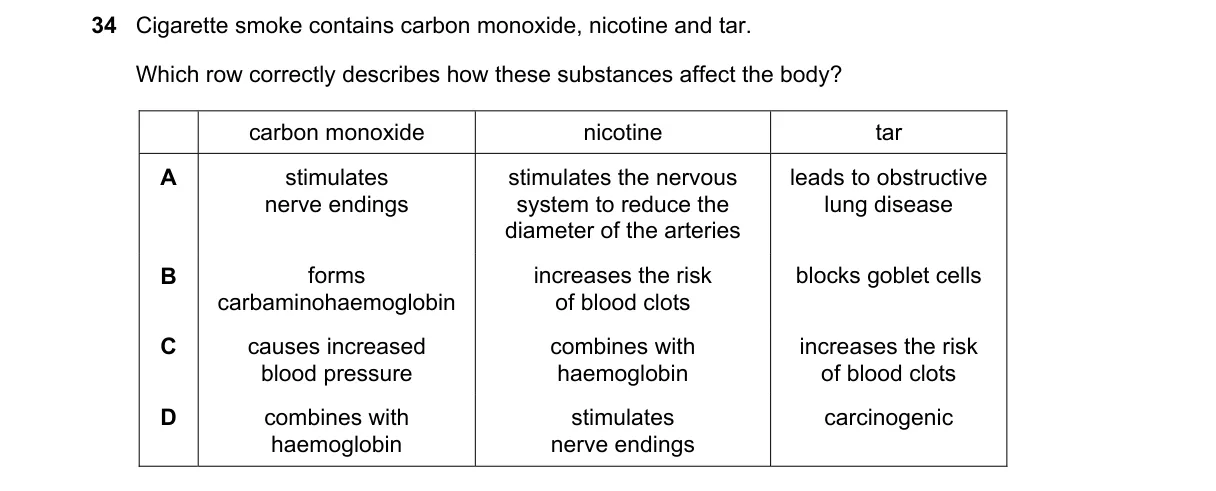
Answer choices
- Acarbon monoxide stimulates nerve endings; nicotine diameter of the arteries; tar leads to obstructive lung disease
- Bcarbon monoxide forms carboxyhemoglobin; nicotine increases clots; tar blocks goblet cells
- Ccarbon monoxide causes increased blood pressure; nicotine combines with hemoglobin; tar increases risk of clots
- Dcarbon monoxide combines with hemoglobin; nicotine stimulates nerve endings; tar carcinogenic
Explanation
Effects of cigarette smoke components on the body
Steps:
- Identify carbon monoxide's action: binds to hemoglobin, forming carboxyhemoglobin and reducing oxygen delivery.
- Identify nicotine's action: acts as a stimulant, exciting nerve endings and increasing heart rate.
- Identify tar's action: contains carcinogens that damage lung tissue and promote cancer.
- Compare options to these known effects to select the matching one.
Why D is correct:
- Matches definitions: carbon monoxide competes with oxygen for hemoglobin binding sites (per gas physiology); nicotine mimics acetylcholine to stimulate nicotinic receptors on nerve endings; tar includes polycyclic aromatic hydrocarbons, known carcinogens per toxicology.
Why the others are wrong:
- A: Carbon monoxide does not stimulate nerves; nicotine narrows bronchi, not arteries; tar causes emphysema, not directly obstructive disease.
- B: Nicotine does not increase clots; tar does not block goblet cells, which produce mucus.
- C: Carbon monoxide does not raise blood pressure; nicotine does not bind hemoglobin; tar does not increase clot risk.
Final answer: D
Topic: The gas exchange system
Practice more A Levels Biology (9700) questions on mMCQ.me