A Levels Biology (9700)•9700/13/M/J/20
A Levels Biology (9700) — 9700/13/M/J/20, Question 32
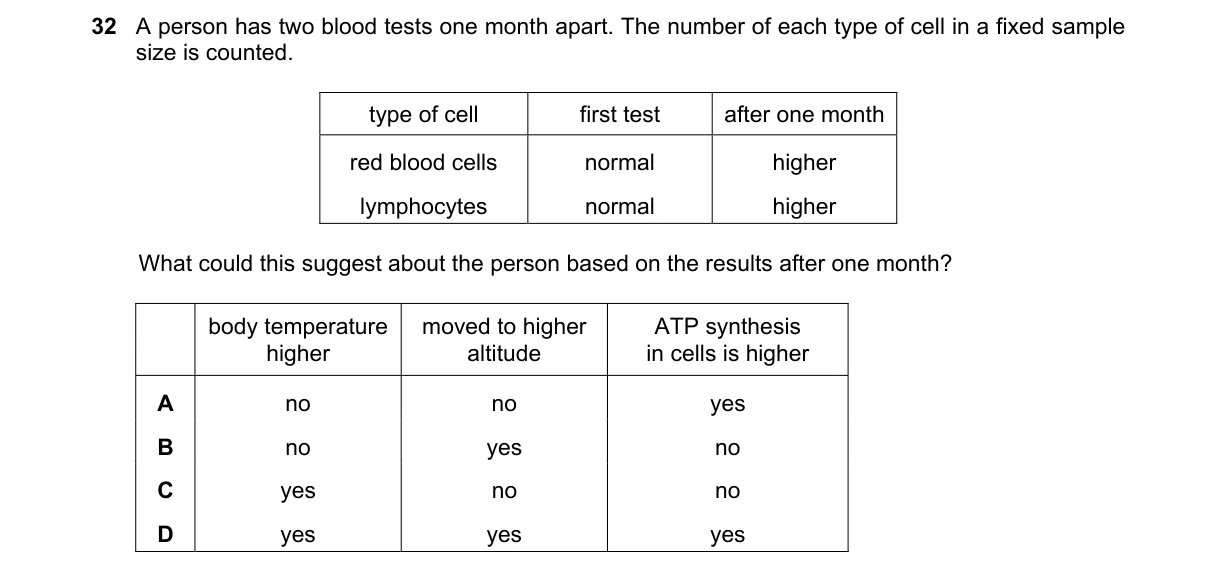
A person has two blood tests one month apart. The number of each type of cell in a fixed sample size is counted.
Type of cell | First test | After one month
Red blood cells | Normal | Higher
Lymphocytes | Normal | Higher
What could this suggest about the person based on the results after one month?
Answer choices
- ABody temperature higher: no; Moved to higher altitude: no; ATP synthesis in cells higher: yes higher
- BBody temperature higher: no; Moved to higher altitude: yes; ATP synthesis in cells higher: no
- CBody temperature higher: yes; Moved to higher altitude: no; ATP synthesis in cells higher: no
- DBody temperature higher: yes; Moved to higher altitude: yes; ATP synthesis in cells higher: yes
Explanation
Physiological adaptations to high altitude and stress
Steps:
- Increased red blood cells indicate hypoxia response, common at higher altitude via erythropoietin stimulation.
- Elevated lymphocytes suggest immune activation from environmental stress or infection.
- Higher body temperature aligns with fever or metabolic heat from acclimatization.
- Increased ATP synthesis reflects upregulated cellular energy production to counter low oxygen.
Why D is correct:
- High altitude triggers erythropoiesis (higher RBC), immune shifts (higher lymphocytes), metabolic upregulation (higher ATP and body temperature via increased respiration and heat production).
Why the others are wrong:
- A: Ignores altitude's role in RBC increase and lymphocyte stress response.
- B: Misses body temperature rise from metabolic demands and infection-like stress.
- C: Altitude explains cell increases, but fever alone doesn't elevate RBC.
Final answer: D
Topic: Transport of oxygen and carbon dioxide
Practice more A Levels Biology (9700) questions on mMCQ.me