A Levels Biology (9700)•9700/13/M/J/20
A Levels Biology (9700) — 9700/13/M/J/20, Question 17
Which row correctly describes parts of chromosome structure present during mitosis?
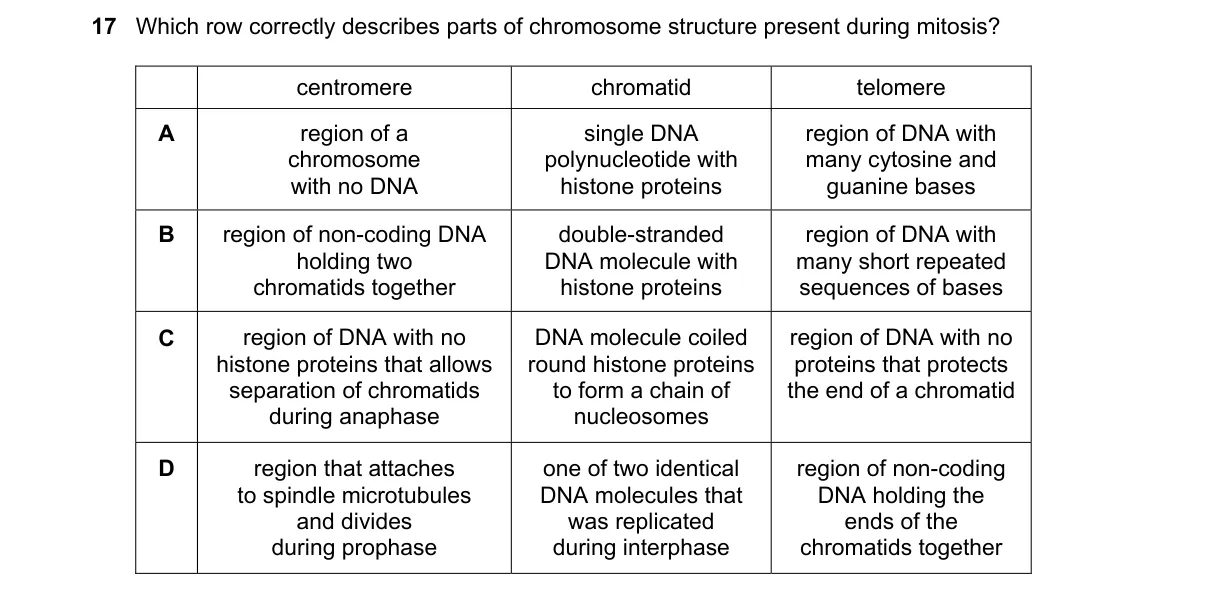
Answer choices
- Acentromere with no DNA single DNA polynucleotide with many guanine and cytosine bases region of telomere
- Bregion of non-coding DNA double-stranded histone proteins region of DNA with sequences of bases
- Cregion of DNA with no histone attachment double-stranded region of DNA forming a chain of nucleosomes proteins that have no role in chromatin
- Dregion that attaches during prophase double replicated DNA molecule that was replicated during interphase region of non-coding chromatids together
Explanation
Chromosome Components in Mitosis
Steps:
- Recall that mitotic chromosomes consist of double-stranded DNA organized into chromatin with histones, including non-coding regions and base sequences.
- Examine each option's three descriptions for accuracy against chromosome structure.
- Verify B matches: non-coding DNA exists, DNA is double-stranded, histones package DNA, and DNA has base sequences.
- Confirm others contain inaccuracies, eliminating them.
Why B is correct:
- Chromosomes contain non-coding DNA regions, double-stranded DNA structure (per Watson-Crick model), histone proteins for nucleosome formation, and DNA sequences of bases defining genetic information.
Why the others are wrong:
- A: Centromere contains DNA (not "no DNA"); DNA is double-stranded, not single polynucleotide; GC-richness is not a defining telomere feature.
- C: All eukaryotic DNA attaches to histones; histones are essential for chromatin structure, not "no role."
- D: Centromere attachment occurs in prometaphase/metaphase, not prophase; chromatids are coding/non-coding, not specified as non-coding.
Final answer: B
Topic: Chromosome behaviour in mitosis
Practice more A Levels Biology (9700) questions on mMCQ.me