A Levels Biology (9700)•9700/12/M/J/20
A Levels Biology (9700) — 9700/12/M/J/20, Question 19
Which description of chromosome structure is correct?
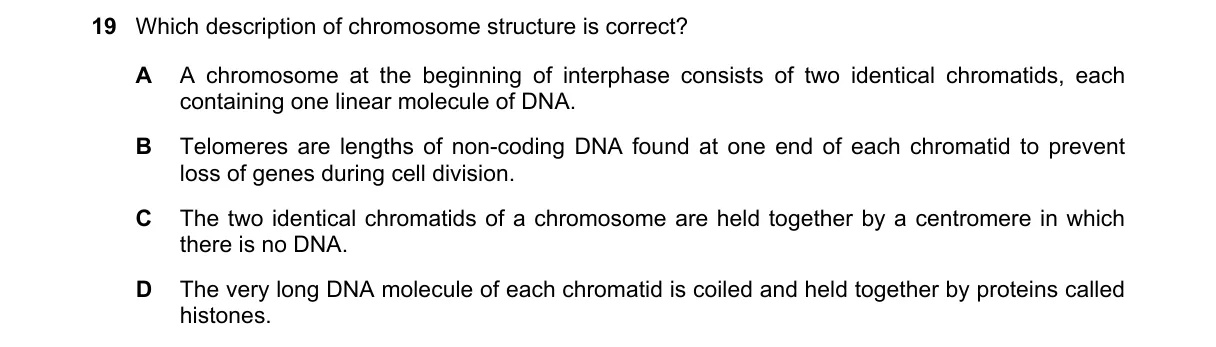
Answer choices
- AA chromosome at the beginning of interphase consists of two identical chromatids, each containing one linear molecule of DNA
- BTelomeres are lengths of non-coding DNA found at one end of each chromatid to prevent loss of genetic information during cell division
- CThe two chromatids of a chromosome are held together by a centromere in which there is no DNA
- DThe long DNA molecule of each chromatid is coiled and held together by proteins called histones
Explanation
Chromosome Structure Basics
Steps:
- Recall that chromosomes consist of DNA packaged with proteins into chromatin.
- Identify that each chromatid contains a single DNA molecule coiled around histones to form nucleosomes.
- Evaluate options against standard definitions: chromosomes in interphase are unreplicated (one chromatid), telomeres protect both ends, centromeres contain DNA, and histones organize DNA.
- Select the option accurately describing DNA-histone interaction.
Why D is correct:
- Each chromatid's DNA forms a double helix coiled into nucleosomes with histone proteins, enabling compact chromosome structure as per chromatin packaging principles.
Why the others are wrong:
- A: Chromosomes at interphase start with one chromatid (unreplicated DNA); two chromatids form after S phase.
- B: Telomeres are at both ends of each chromatid, not one, to cap linear chromosomes.
- C: Centromeres contain DNA sequences for kinetochore attachment and sister chromatid cohesion.
Final answer: D
Topic: Chromosome behaviour in mitosis
Practice more A Levels Biology (9700) questions on mMCQ.me