A Levels Biology (9700)•9700/13/M/J/19
A Levels Biology (9700) — 9700/13/M/J/19, Question 17
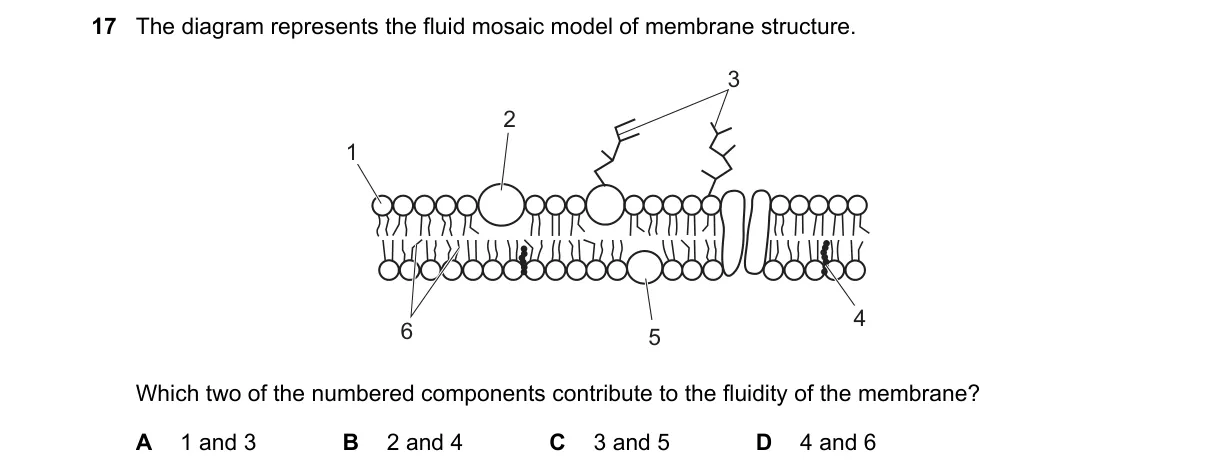
The diagram represents the fluid mosaic model membrane structure. Which two numbered components contribute to the fluidity of the membrane?
Answer choices
- A1 and 3
- B2 and 4
- C3 and 5
- D4 and 6
Explanation
Membrane Fluidity from Lipid Components
Steps:
- Identify key factors in fluid mosaic model: phospholipid tails and cholesterol affect membrane fluidity.
- Unsaturated fatty acid chains create kinks, preventing tight packing and increasing fluidity.
- Cholesterol inserts between phospholipids, modulating fluidity by disrupting packing at various temperatures.
- Match to diagram: components 4 (unsaturated tails) and 6 (cholesterol) directly enhance fluidity.
Why D is correct:
- Unsaturated tails (4) and cholesterol (6) increase fluidity per the fluid mosaic model, where kinks in unsaturated chains and cholesterol's buffering effect maintain membrane flexibility.
Why the others are wrong:
- A: 1 (likely proteins) and 3 (saturated tails) reduce fluidity by stabilizing structure and allowing tight packing.
- B: 2 (phospholipid heads) and 4 (unsaturated tails) mix hydrophilic and hydrophobic roles, but heads don't directly affect fluidity.
- C: 3 (saturated tails) and 5 (possibly glycoproteins) decrease fluidity through straight chains and rigid attachments.
Final answer: D
Topic: Fluid mosaic membranes
Practice more A Levels Biology (9700) questions on mMCQ.me