A Levels Biology (9700)•9700/11/M/J/19
A Levels Biology (9700) — 9700/11/M/J/19, Question 34
Which correctly describes the short-term effects of carbon monoxide and nicotine on the concentration of oxygen in blood of a smoker?
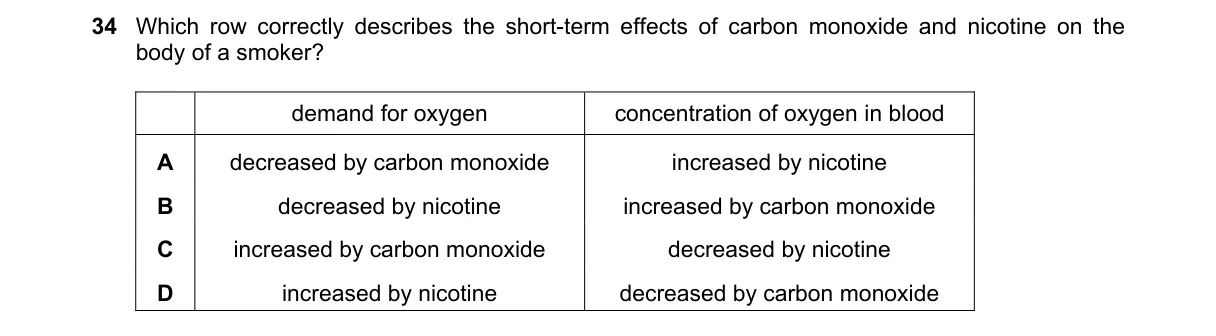
Answer choices
- Adecreased by carbon monoxide, increased by nicotine
- Bdecreased by nicotine, increased by carbon monoxide
- Cincreased by carbon monoxide, decreased by nicotine
- Dincreased by nicotine, decreased by carbon monoxide
Explanation
Effects of CO and nicotine on blood oxygen
Steps:
- Carbon monoxide binds to hemoglobin more strongly than oxygen, forming carboxyhemoglobin and reducing oxygen transport capacity.
- This binding decreases the overall concentration of oxygen in the blood.
- Nicotine stimulates the respiratory center in the brain, increasing breathing rate and oxygen intake.
- The faster breathing raises the partial pressure of oxygen, increasing its concentration in arterial blood short-term.
Why D is correct:
- D accurately states nicotine increases oxygen concentration via enhanced ventilation, while carbon monoxide decreases it by blocking hemoglobin's oxygen-binding sites.
Why the others are wrong:
- A incorrectly swaps the effects, claiming carbon monoxide increases oxygen.
- B reverses both: nicotine decreases oxygen (it increases), and carbon monoxide increases it (it decreases).
- C inverts the impacts, suggesting carbon monoxide boosts oxygen despite its competitive binding.
Final answer: D
Topic: Transport of oxygen and carbon dioxide
Practice more A Levels Biology (9700) questions on mMCQ.me