A Levels Biology (9700)•9700/13/M/J/18
A Levels Biology (9700) — 9700/13/M/J/18, Question 37
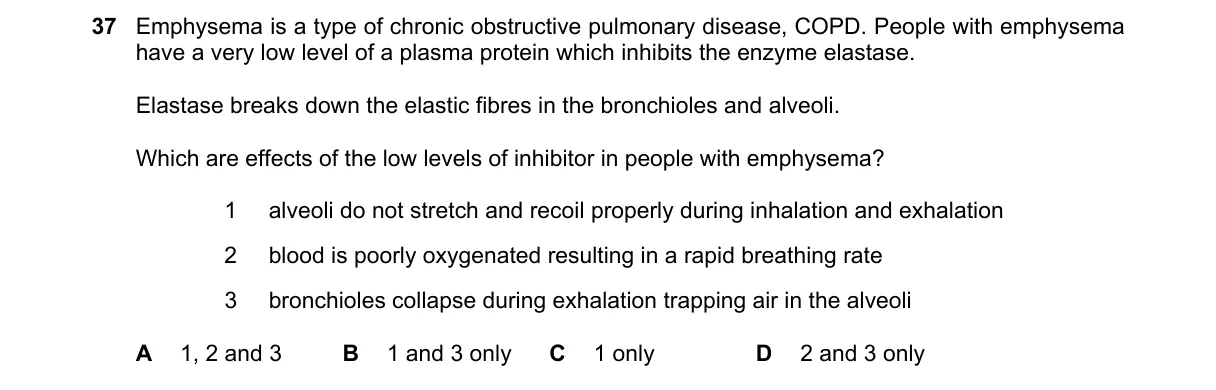
Emphysema is a type of chronic obstructive pulmonary disease (COPD). People with emphysema have a very low level of alpha-1 protein which inhibits the enzyme elastase. Elastase breaks down the elastic fibers in the bronchioles and alveoli.
Which are effects of the low levels of inhibitor in people with emphysema?
1 blood is poorly oxygenated resulting in rapid breathing rate
2
3 bronchioles collapse during exhalation trapping air in alveoli
Answer choices
- A1,2 and 3
- B1 and 3
- C1 only
- D2 and 3
Explanation
Low alpha-1 antitrypsin leads to unchecked elastase activity in emphysema
Steps:
- Low alpha-1 protein allows elastase to degrade elastic fibers in alveoli and bronchioles.
- Degraded fibers cause alveolar wall destruction, reducing surface area for gas exchange.
- Loss of elasticity impairs lung recoil, leading to bronchiolar collapse on exhalation and air trapping.
- Trapped air and poor ventilation result in hypoxemia, stimulating rapid breathing.
Why A is correct:
- Emphysema definition includes all three: alveolar destruction (2), air trapping from collapse (3), and hypoxemia-driven tachypnea (1) due to elastase-mediated damage.
Why the others are wrong:
- B omits 2, but elastic fiber breakdown directly destroys alveolar structure.
- C omits 2 and 3, ignoring core pathology of tissue loss and air trapping.
- D omits 1, but hypoxemia from reduced gas exchange causes compensatory rapid breathing.
Final answer: A
Topic: The gas exchange system
Practice more A Levels Biology (9700) questions on mMCQ.me