A Levels Biology (9700)•9700/13/M/J/18
A Levels Biology (9700) — 9700/13/M/J/18, Question 33
At high altitudes, the oxygen content of the air may be a third of that at sea level. As a person climbs a mountain, their body gradually adjusts to the height. What is increased during this period of adjustment to altitude?
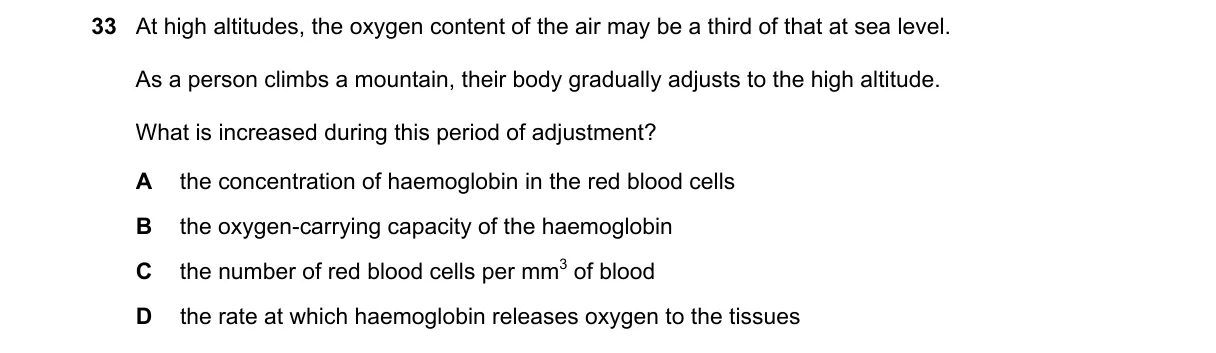
Answer choices
- Athe concentration of hemoglobin in the blood
- Bthe oxygen-carrying capacity of the hemoglobin in the red blood cells
- Cthe number of red blood cells per mm³ of blood
- Dthe rate at which hemoglobin releases oxygen to the tissues
Explanation
Acclimatization to high-altitude hypoxia via erythropoiesis
Steps:
- Low oxygen at altitude triggers hypoxia, detected by kidneys.
- Kidneys release erythropoietin (EPO) hormone.
- EPO stimulates bone marrow to produce more red blood cells (RBCs).
- Increased RBCs enhance oxygen transport to tissues.
Why C is correct:
- Erythropoiesis, the process of RBC production, increases RBC count per mm³ to compensate for lower oxygen availability, as defined by physiological response to hypoxia.
Why the others are wrong:
- A: Hemoglobin concentration per RBC remains constant; total hemoglobin rises only due to more RBCs.
- B: Each hemoglobin molecule's oxygen-binding sites (four per molecule) do not increase.
- D: Hemoglobin's oxygen release rate is regulated by tissue pH and CO2, not directly by altitude acclimatization.
Final answer: C
Topic: Transport of oxygen and carbon dioxide
Practice more A Levels Biology (9700) questions on mMCQ.me