A Levels Biology (9700)•9700/12/M/J/18
A Levels Biology (9700) — 9700/12/M/J/18, Question 35
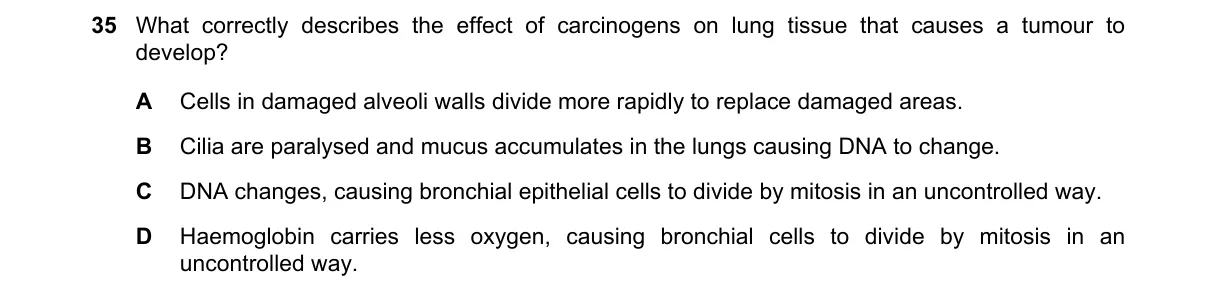
What correctly describes the effect of carcinogens on lung tissue that causes a tumour to develop?
Answer choices
- ACells in damaged alveoli walls divide more rapidly to replace damaged areas.
- BCilia are paralysed and mucus accumulates in the lungs causing DNA to change.
- CDNA changes, causing bronchial epithelial cells to divide by mitosis in an uncontrolled way.
- DHaemoglobin carries less oxygen, causing bronchial cells to divide by mitosis in an uncontrolled way.
Explanation
Carcinogens induce DNA mutations leading to uncontrolled cell division in lung tissue
Steps:
- Identify that carcinogens are agents causing cancer by damaging DNA.
- Recall tumors form from uncontrolled mitosis in affected cells.
- Evaluate options for accurate description of DNA change and cell division in bronchial epithelium.
- Select the option linking DNA alteration directly to uncontrolled mitosis.
Why C is correct:
- Carcinogens mutate DNA, disrupting cell cycle control and causing bronchial epithelial cells to undergo uncontrolled mitosis, per the definition of oncogenesis.
Why the others are wrong:
- A: Rapid division in alveoli repairs damage but does not cause tumors via carcinogens.
- B: Cilia paralysis leads to mucus buildup and infection risk, not direct DNA changes for tumors.
- D: Reduced oxygen transport affects respiration but does not trigger uncontrolled mitosis in bronchial cells.
Final answer: C
Topic: Replication and division of nuclei and cells
Practice more A Levels Biology (9700) questions on mMCQ.me