A Levels Biology (9700)•9700/12/M/J/18
A Levels Biology (9700) — 9700/12/M/J/18, Question 31
If the atrioventricular valve in the heart does not close completely it results in blood flowing back into the atrium during ventricular systole. What would be the immediate effect of this flow back?
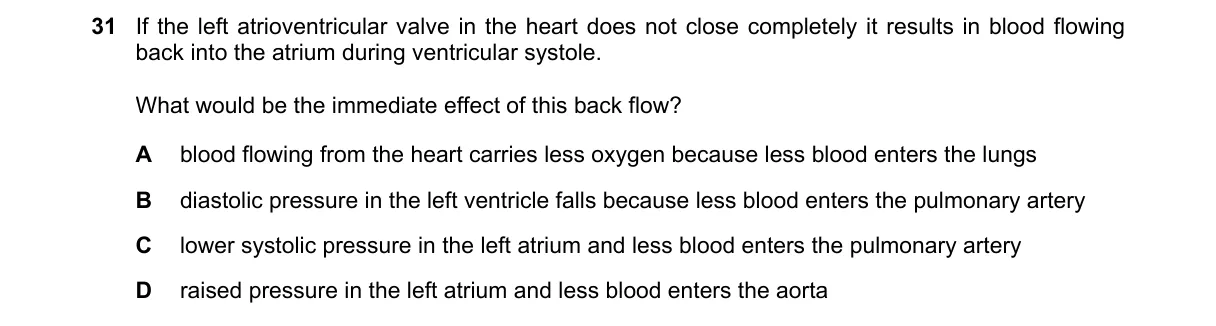
Answer choices
- Ablood flowing from the heart carries less oxygen because less blood enters the lungs
- Bdiastolic pressure in the left ventricle falls because less blood enters the pulmonary artery
- Clower systolic pressure in the left atrium and less blood enters the aorta
- Draised pressure in the left atrium and less blood enters pulmonary artery
Explanation
AV Valve Regurgitation Effects Steps:
- Incomplete AV valve closure causes blood to regurgitate into the atrium during ventricular systole.
- Regurgitant volume increases atrial blood volume, elevating atrial pressure.
- Net forward blood flow from the ventricle decreases due to backward leakage.
- Reduced left ventricular output lowers overall cardiac output, decreasing pulmonary artery inflow.
Why D is correct:
- Mitral regurgitation definition: backward flow raises left atrial pressure (v wave), while reduced stroke volume decreases pulmonary artery blood flow via lower systemic return and cardiac output.
Why the others are wrong:
- A: Oxygenation depends on pulmonary capillary exchange, not immediate volume reduction.
- B: Diastolic LV pressure relates to preload, which may rise from volume overload, not fall.
- C: Systolic LA pressure rises from regurgitant volume, not lowers; forward flow reduction affects aorta, not pulmonary artery as stated.
Final answer: D
Topic: The heart
Practice more A Levels Biology (9700) questions on mMCQ.me