O Levels/IGCSE Accounting (7707)•7707/12/M/J/23
O Levels/IGCSE Accounting (7707) — 7707/12/M/J/23, Question 11
Wasem received a bank statement. He found that the bank had charged interest twice in error on an investment and that a dividend had been received on an investment. Wasem then updated the cash book and prepared a bank reconciliation statement. Where did he record these errors?
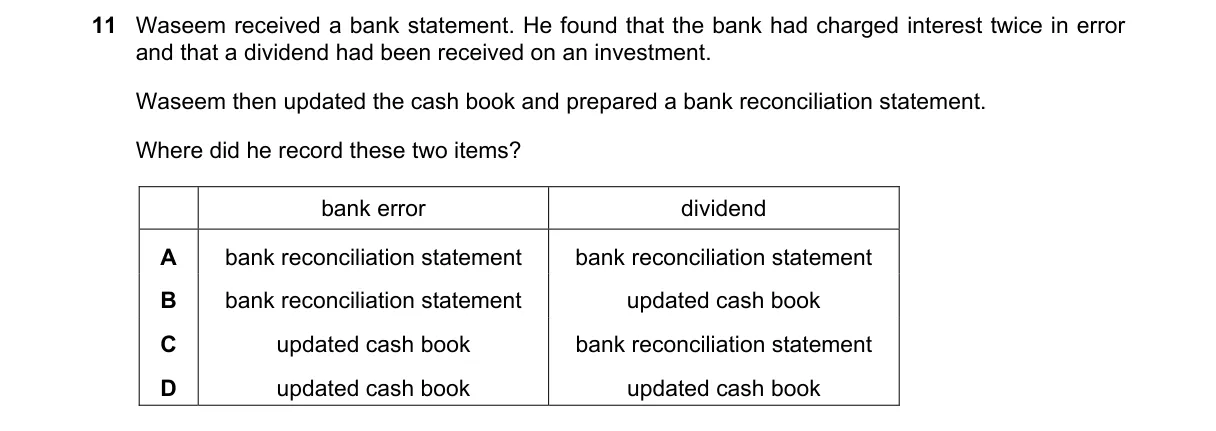
Answer choices
- ABank error: bank reconciliation statement; Dividend: bank reconciliation statement
- BBank error: updated cash book; Dividend: updated cash book
- CBank error: bank reconciliation statement; Dividend: updated cash book
- DBank error: updated cash book; Dividend: updated cash book
Explanation
Updating cash book for bank statement items and errors
Steps:
- Review bank statement: identify double interest charge as bank error and unrecorded dividend receipt.
- For bank error, adjust cash book by recording only the correct single interest charge to reflect accurate books.
- For dividend, enter the receipt in cash book as omitted income.
- Balance the updated cash book, then prepare reconciliation for timing differences.
Why B is correct:
- Per double-entry accounting, cash book must be updated for all valid transactions and corrections from bank statement before reconciliation to ensure accurate financial records.
Why the others are wrong:
- A: BRS handles timing issues, not book updates for omissions or corrections.
- C: Bank error requires cash book adjustment for correct recording, not just BRS notation.
- D: Identical to B, but listed as distractor with no distinction.
Final answer: B
Topic: Bank reconciliation
Practice more O Levels/IGCSE Accounting (7707) questions on mMCQ.me