O Levels/IGCSE Accounting (7707)•7707/12/M/J/20
O Levels/IGCSE Accounting (7707) — 7707/12/M/J/20, Question 16
A non-current asset was depreciated at the end of the first year of ownership using the straight-line method based on the following information. Cost $20,000. Working life 4 years. It was then found that the reducing balance method at 30% per annum should have been used. What is the effect on the profit for the year of correcting this error?
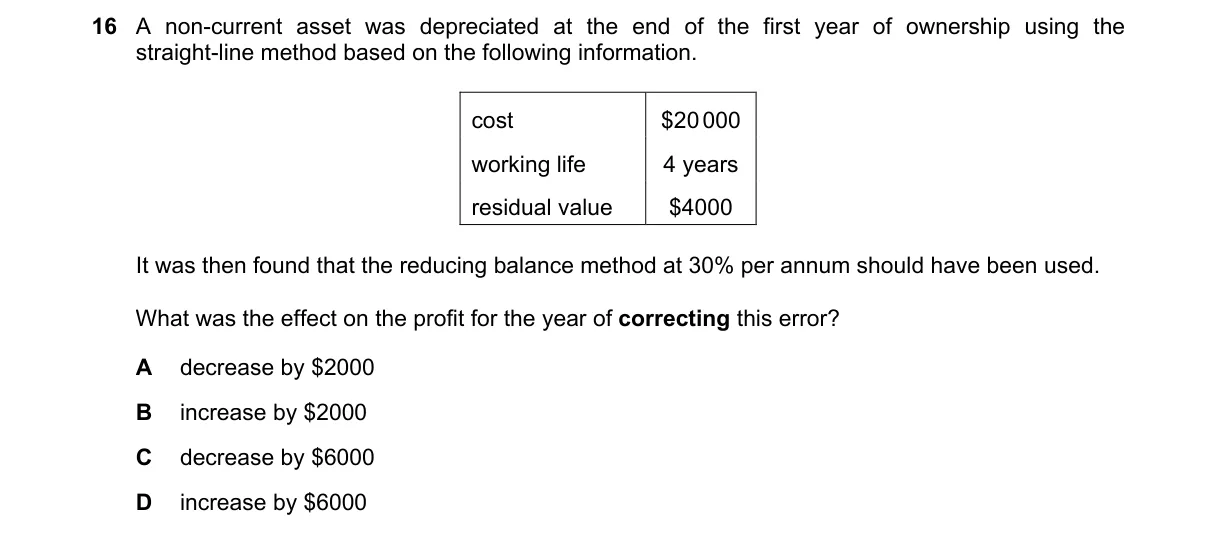
Answer choices
- Aincrease by $2000
- Bdecrease by $2000
- Cdecrease by $6000
- Dincrease by $6000
Explanation
Overstated depreciation under reducing balance increases profit upon correction to straight-line Steps:
- Recorded depreciation using reducing balance: 30% × 6,000.
- Correct depreciation using straight-line: 4,000.
- Excess expense recorded: 4,000 = $2,000.
- Correction reduces depreciation expense by 2,000. Why A is correct:
- Depreciation expense under reducing balance exceeds straight-line in year 1; adjustment lowers expense per accounting error correction rules (IAS 8), boosting profit by the $2,000 difference. Why the others are wrong:
- B: Applies if straight-line exceeded reducing balance, but reducing balance is higher here.
- C: Equals recorded reducing balance amount, not the net adjustment effect.
- D: Doubles the actual $2,000 difference without basis.
Final answer: A
Topic: Accounting for depreciation and disposal of non-current assets
Practice more O Levels/IGCSE Accounting (7707) questions on mMCQ.me