O Levels/IGCSE Biology (5090)•5090/12/O/N/24
O Levels/IGCSE Biology (5090) — 5090/12/O/N/24, Question 16
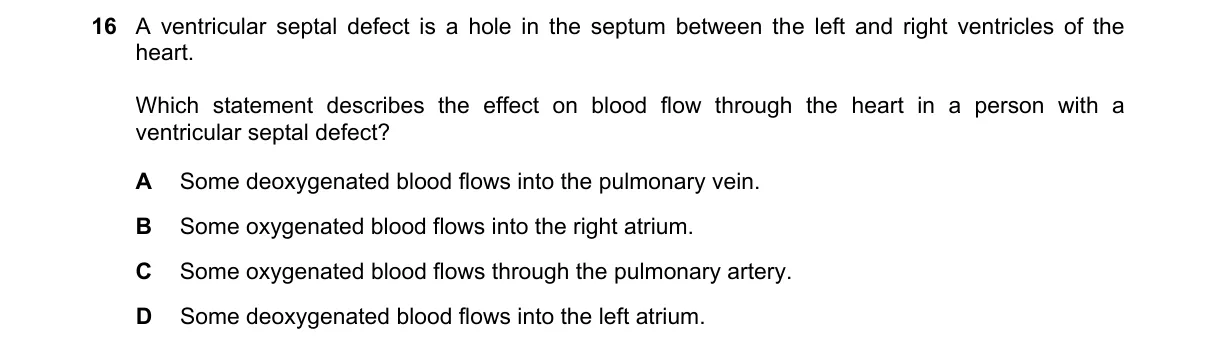
A ventricular septal defect is a hole in the septum between the left and right ventricles of the heart. Which statement describes the effect of blood flow through the ventricular septal defect?
Answer choices
- ASome oxygenated blood flows into the pulmonary vein.
- BSome oxygenated blood flows into the right atrium.
- CSome oxygenated blood flows through the pulmonary artery.
- DSome deoxygenated blood flows into the left atrium.
Explanation
Left-to-right shunt in VSD
Steps:
- Left ventricle contains oxygenated blood under higher pressure than right ventricle with deoxygenated blood.
- VSD allows blood to flow from higher-pressure left ventricle to lower-pressure right ventricle.
- This shunts oxygenated blood into the right ventricle.
- Oxygenated blood then exits right ventricle via pulmonary artery to lungs.
Why C is correct:
- Higher left ventricular pressure drives oxygenated blood through VSD into right ventricle and pulmonary artery, per pressure gradient principle in congenital heart defects.
Why the others are wrong:
- A: Pulmonary vein carries oxygenated blood from lungs to left atrium; VSD affects ventricles, not veins.
- B: Shunt occurs between ventricles, not into right atrium upstream.
- D: Left-to-right shunt predominates, preventing deoxygenated blood from entering left atrium.
Final answer: C
Topic: Heart
Practice more O Levels/IGCSE Biology (5090) questions on mMCQ.me