O Levels/IGCSE Biology (5090)•5090/12/O/N/23
O Levels/IGCSE Biology (5090) — 5090/12/O/N/23, Question 35
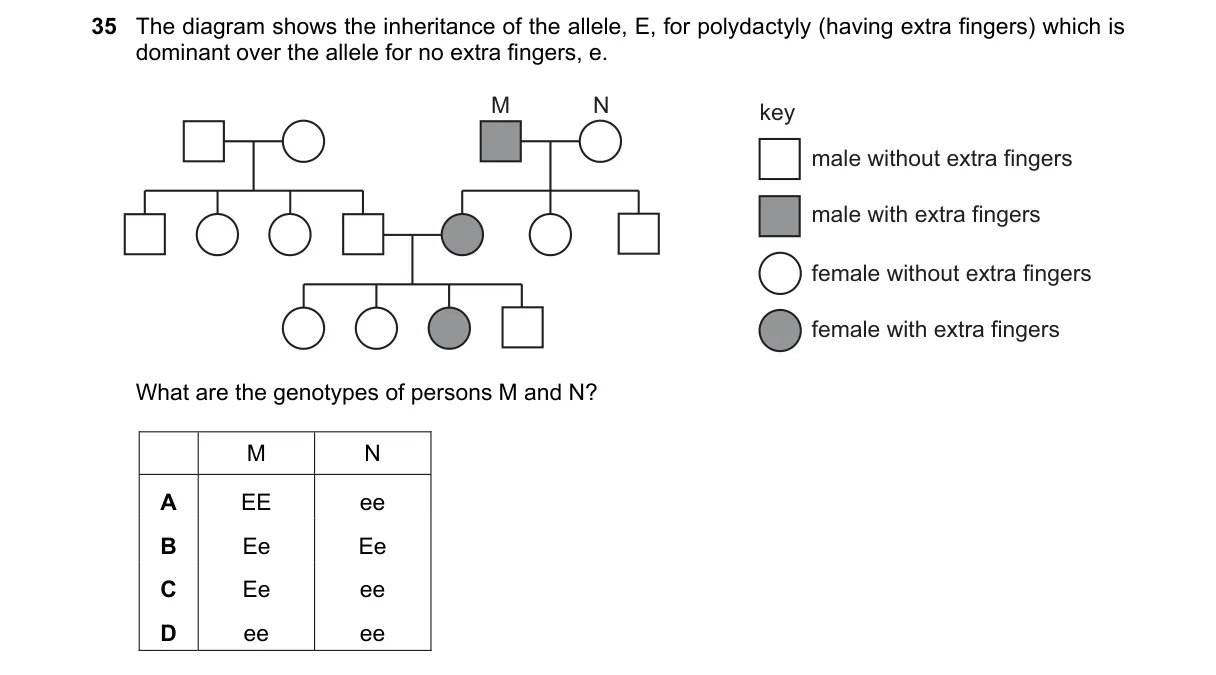
The diagram shows the inheritance of the allele, E, for polydactyly (having extra fingers) which is dominant over the allele for no extra fingers. What are the genotypes of persons M and N?
Answer choices
- AM: EE, N: ee
- BM: Ee, N: Ee
- CM: Ee, N: ee
- DM: ee, N: ee
Explanation
Genotype deduction from dominant inheritance in pedigree
Steps:
- Identify phenotypes: M shows polydactyly (E_), N shows no extra fingers (ee).
- Examine offspring: Presence of both polydactylous (E_) and normal (ee) children indicates M must carry recessive e allele.
- Confirm dominance: E dominant means unaffected offspring from M require M to be heterozygous Ee.
- Rule out homozygous: If M were EE, all offspring would show polydactyly; if both ee, no polydactyly in family.
Why C is correct:
- M (Ee) expresses dominant trait but produces unaffected ee offspring with N (ee), matching Mendelian heterozygous-dominant cross (Ee x ee yields 50% Ee, 50% ee).
Why the others are wrong:
- A: M (EE) would produce only polydactylous offspring, not matching normal children.
- B: Both Ee would yield 75% polydactylous offspring on average, but N lacks trait (must be ee).
- D: Both ee cannot produce any polydactylous offspring, contradicting family traits.
Final answer: C
Topic: Inheritance
Practice more O Levels/IGCSE Biology (5090) questions on mMCQ.me