O Levels/IGCSE Biology (5090)•5090/11/O/N/23
O Levels/IGCSE Biology (5090) — 5090/11/O/N/23, Question 22
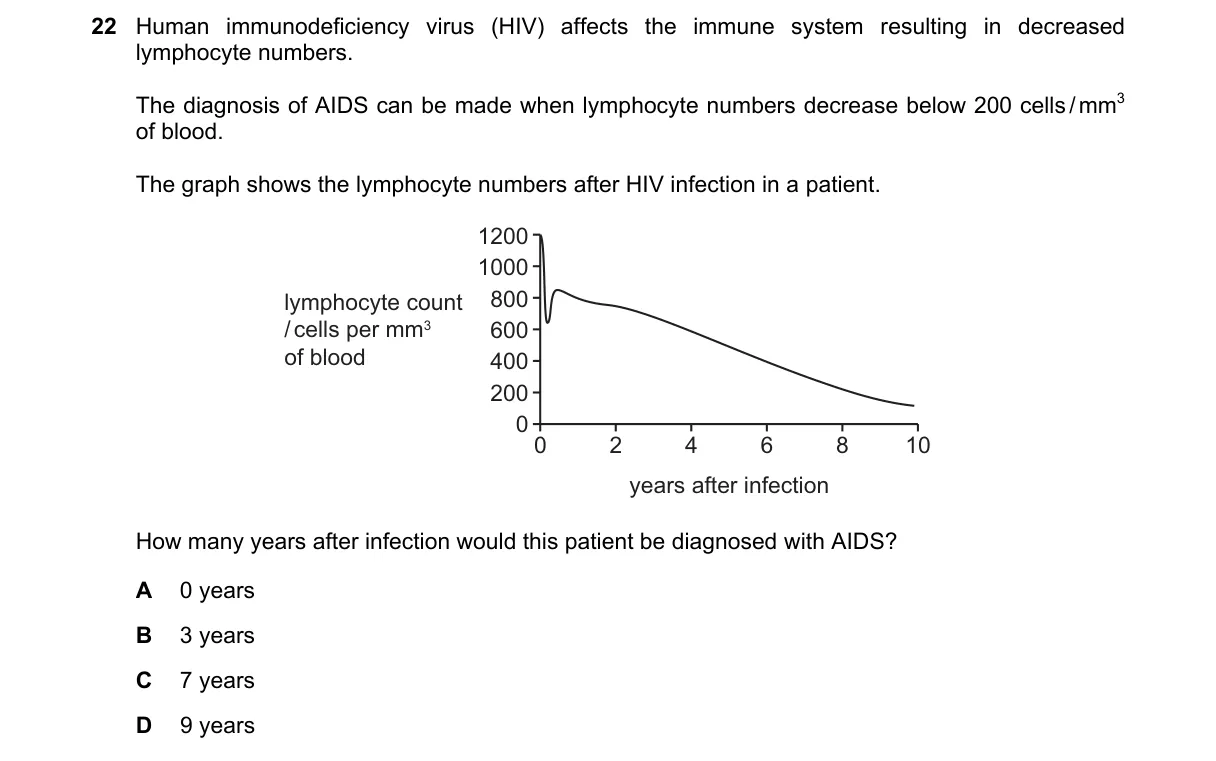
Human immunodeficiency virus (HIV) affects the immune system resulting in decreased lymphocyte numbers. Diagnosis of AIDS can be made when lymphocyte numbers decrease below 200 cells/mm³ of blood. The graph shows the lymphocyte count after HIV infection in a patient. How many years after infection would this patient be diagnosed with AIDS?
Answer choices
- A0 years
- B3 years
- C7 years
- D10 years
Explanation
AIDS Diagnosis Based on Lymphocyte Threshold
Steps:
- Recall AIDS diagnosis occurs when lymphocyte count drops below 200 cells/mm³.
- Analyze the graph: lymphocyte count starts high post-infection and declines over time.
- Identify the point where the curve crosses below 200 cells/mm³.
- Determine the corresponding time: 10 years after infection.
Why D is correct:
- Lymphocyte count falls below 200 cells/mm³ at 10 years, fulfilling the CDC diagnostic criterion for AIDS in HIV patients.
Why the others are wrong:
- A: At 0 years, count is normal (above 1000 cells/mm³), no AIDS.
- B: At 3 years, count remains above 500 cells/mm³, not diagnostic.
- C: At 7 years, count is still above 200 cells/mm³, insufficient for diagnosis.
Final answer: D
Topic: Immunity
Practice more O Levels/IGCSE Biology (5090) questions on mMCQ.me