O Levels/IGCSE Biology (5090)•5090/11/O/N/22
O Levels/IGCSE Biology (5090) — 5090/11/O/N/22, Question 15
Tissue transplants are normally rejected by the body unless the transplant tissue and the patient are very carefully matched. Which component of the blood is responsible for the rejection of transplanted tissue?
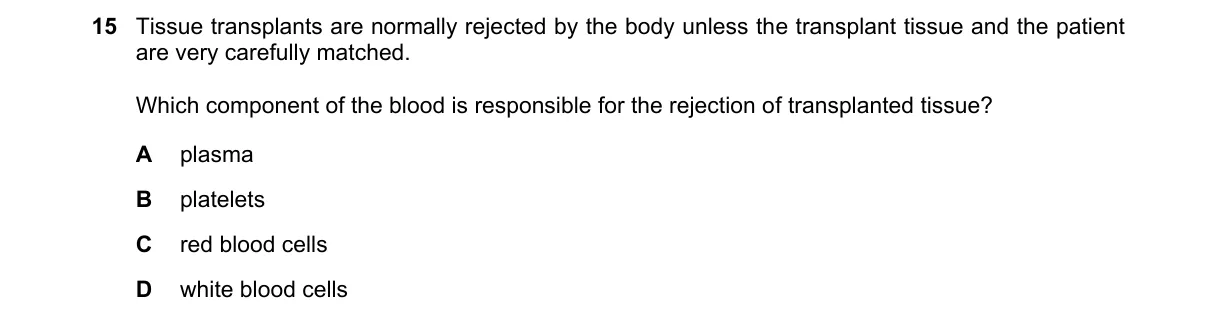
Answer choices
- Aplasma
- Bplatelets
- Cred blood cells
- Dwhite blood cells
Explanation
Immune System's Role in Transplant Rejection
Steps:
- Identify that transplant rejection involves the body's defense mechanism attacking foreign tissue.
- Recall that the immune system uses specific cells to detect and respond to non-self antigens on transplanted tissue.
- Determine which blood component contains these immune cells responsible for recognition and attack.
- Link the process to cellular immunity, where mismatched tissues trigger a response leading to rejection.
Why D is correct:
- White blood cells, particularly lymphocytes (T-cells and B-cells), recognize foreign MHC antigens on transplant tissue and mount an immune response, as defined in immunology by the adaptive immune system's antigen-specific attack.
Why the others are wrong:
- A. Plasma carries antibodies but does not initiate cellular rejection; it's involved in humoral immunity only after activation.
- B. Platelets aid clotting, not immune surveillance or tissue rejection.
- C. Red blood cells transport oxygen and lack immune recognition capabilities.
Final answer: D
Topic: Immunity
Practice more O Levels/IGCSE Biology (5090) questions on mMCQ.me