O Levels/IGCSE Biology (5090)•5090/11/O/N/19
O Levels/IGCSE Biology (5090) — 5090/11/O/N/19, Question 16
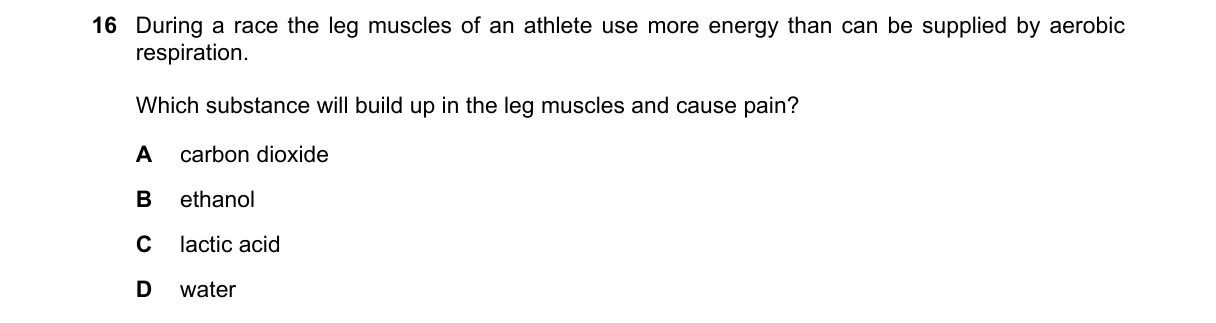
During a race the leg muscles of an athlete use more energy than can be supplied by aerobic respiration. Which substance will build up in the leg muscles and cause pain?
Answer choices
- Acarbon dioxide
- Bethanol
- Clactic acid
- Dwater
Explanation
Anaerobic Respiration Builds Up Lactic Acid in Muscles
Steps:
- Intense exercise demands energy faster than oxygen can supply for aerobic respiration.
- Muscles switch to anaerobic respiration to generate ATP quickly.
- In human muscle cells, anaerobic glycolysis converts glucose to pyruvate, then to lactic acid.
- Lactic acid accumulates, lowering pH and causing pain.
Why C is correct:
- Lactic acid forms via anaerobic glycolysis: glucose → 2 pyruvate + 2 ATP (aerobic), but under low oxygen, pyruvate → lactic acid to regenerate NAD⁺ for continued ATP production.
Why the others are wrong:
- A. Carbon dioxide: Main byproduct of aerobic respiration, exhaled without causing muscle pain.
- B. Ethanol: Produced in yeast fermentation, not human muscle metabolism.
- D. Water: Formed in aerobic respiration's electron transport chain, harmless and not pain-inducing.
Final answer: C
Topic: Anaerobic respiration
Practice more O Levels/IGCSE Biology (5090) questions on mMCQ.me