O Levels/IGCSE Biology (5090)•5090/11/O/N/18
O Levels/IGCSE Biology (5090) — 5090/11/O/N/18, Question 31
Draining stagnant water is one method of controlling the malaria mosquito. Which stages of the mosquito life cycle does this method destroy?
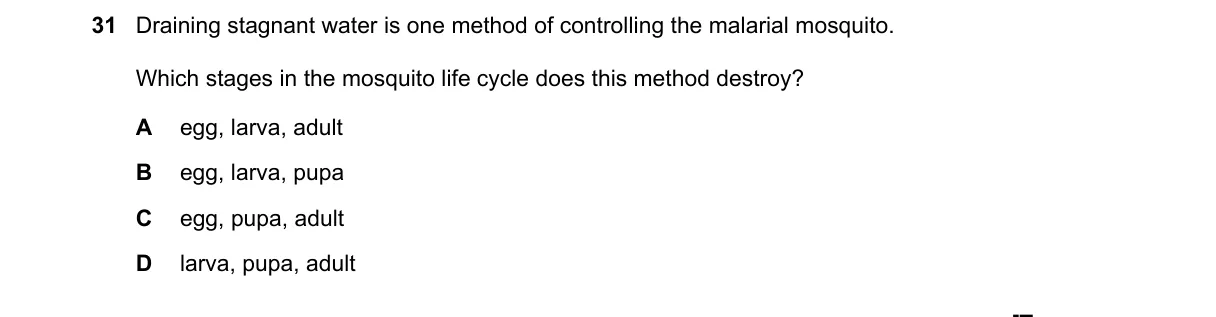
Answer choices
- Aegg, larva
- Begg, pupa
- Clarva, pupa
- Dlarva, pupa, adult
Explanation
Draining water targets non-mobile aquatic mosquito stages
Steps:
- Recall mosquito life cycle: eggs laid on water, larvae and pupae develop in water, adults emerge and fly.
- Identify aquatic stages requiring stagnant water for survival: eggs float on surface, pupae remain in water.
- Determine draining effect: removes water, destroying immobile eggs and pupae unable to escape.
- Match to options: egg and pupa stages are directly eliminated.
Why B is correct:
- Eggs and pupae are strictly aquatic and non-motile, per mosquito biology, so draining instantly kills them by habitat removal.
Why the others are wrong:
- A: Omits pupa; larvae survive briefly if water recedes slowly but are not the only target.
- C: Excludes egg; eggs are primary breeding site destroyed first.
- D: Includes adult; adults live on land and are unaffected by water drainage.
Final answer: B
Topic: Disease
Practice more O Levels/IGCSE Biology (5090) questions on mMCQ.me