O Levels/IGCSE Biology (5090)•5090/11/O/N/18
O Levels/IGCSE Biology (5090) — 5090/11/O/N/18, Question 14
The diagram shows a section through the human heart. Which suggests that blood leaves the heart at different pressures, when going to lungs and to body?
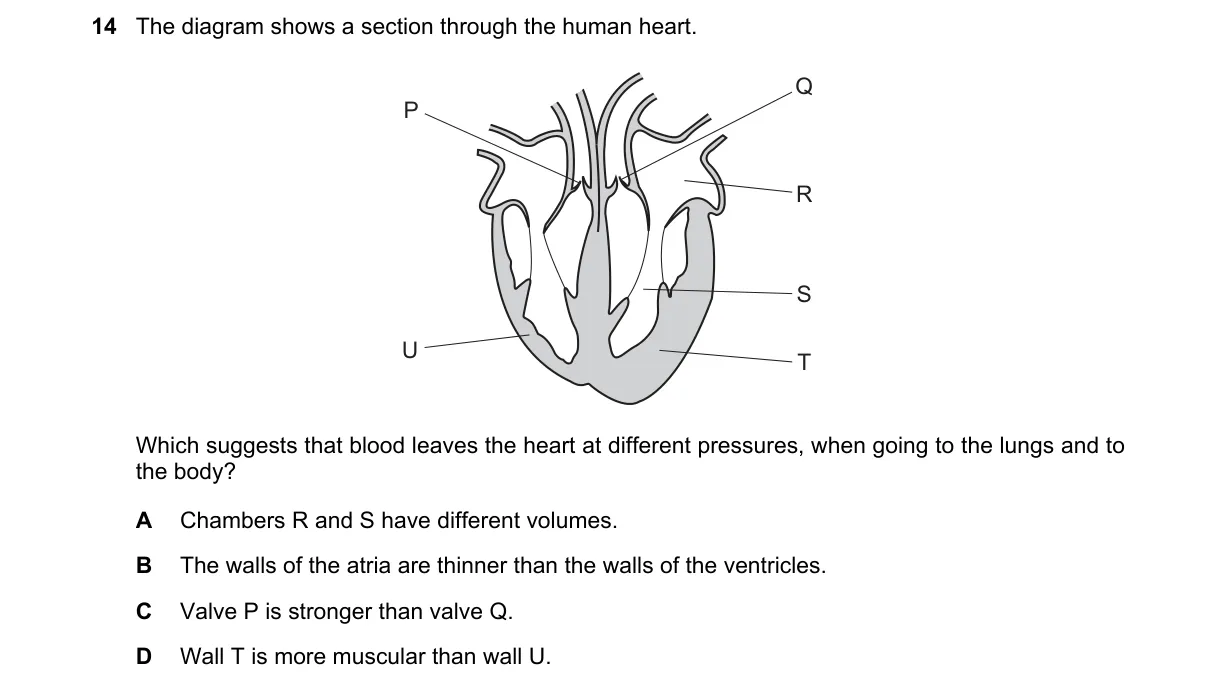
Answer choices
- AChambers R and S have thinner walls than the ventricles.
- BValve P is stronger than valve Q.
- CWall T is more muscular than wall U.
- DWalls of the atria are thinner than walls of the ventricles.
Explanation
Wall thickness indicates pressure differences in blood flow
Steps:
- Blood exits the heart via ventricles: right to lungs (low pressure), left to body (high pressure).
- Thicker walls generate higher pressure to match circulatory demands.
- Atria receive blood and have thinner walls for lower internal pressure.
- Comparing atrial and ventricular walls highlights overall pressure variation for pulmonary vs. systemic circulation.
Why D is correct:
- Ventricular walls are thicker than atrial walls to pump blood at higher pressure to the body, while atrial contraction supports lower-pressure flow toward the lungs, per the principle that muscle thickness correlates with force/pressure output.
Why the others are wrong:
- A: Thinner walls in R and S (likely atria) confirm general structure but don't specify exit pressure differences to lungs vs. body.
- B: Valve strength affects flow direction, not pressure generation for different paths.
- C: Greater muscularity in T vs. U suggests side-specific differences but not overall atrial-ventricular pressure contrast.
Final answer: D
Topic: Heart
Practice more O Levels/IGCSE Biology (5090) questions on mMCQ.me