O Levels/IGCSE Biology (5090)•5090/12/M/J/25
O Levels/IGCSE Biology (5090) — 5090/12/M/J/25, Question 23
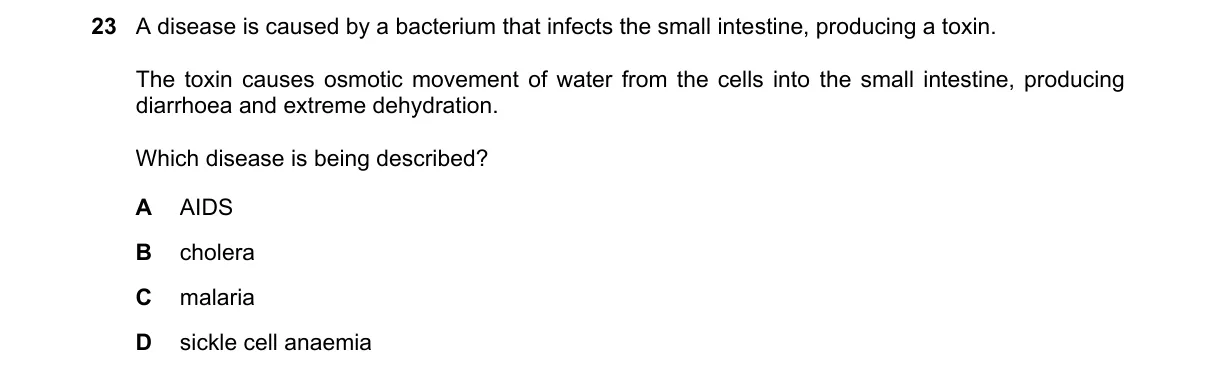
A disease is caused by a bacterium that infects the small intestine, producing a toxin. The toxin causes osmotic movement of water from cells into the small intestine, producing diarrhea and extreme dehydration. Which disease is being described?
Answer choices
- AAIDS
- BCHOLERA
- Cmalaria
- Dsickle cell anemia
Explanation
Bacterial toxin causing osmotic diarrhea
Steps:
- Identify key symptoms: bacterial infection in small intestine with toxin-induced osmotic water movement leading to diarrhea and dehydration.
- Recall diseases involving bacterial toxins in the gut: focus on those producing enterotoxins that disrupt ion balance.
- Match symptoms to cholera: Vibrio cholerae toxin causes massive fluid secretion via cAMP pathway.
- Eliminate non-bacterial or non-intestinal diseases.
Why B is correct:
- Cholera is defined by Vibrio cholerae infection producing cholera toxin, which activates adenylate cyclase, increasing cAMP and causing chloride efflux, osmotic water loss, and severe dehydration.
Why the others are wrong:
- A. AIDS: Viral (HIV) immune deficiency, not bacterial toxin or diarrhea-focused.
- C. Malaria: Parasitic (Plasmodium) blood infection causing fever and anemia, not intestinal toxin.
- D. Sickle cell anemia: Genetic hemoglobin disorder causing blood cell sickling, not infectious or toxin-related.
Final answer: B
Topic: Disease
Practice more O Levels/IGCSE Biology (5090) questions on mMCQ.me