O Levels/IGCSE Biology (5090)•5090/11/M/J/25
O Levels/IGCSE Biology (5090) — 5090/11/M/J/25, Question 26
The internal body temperature of some animals, including humans, remains constant even when the external temperature changes. The graph shows how oxygen used by one of these animals is affected by change in the external temperature. Which conclusion can be made from this graph?
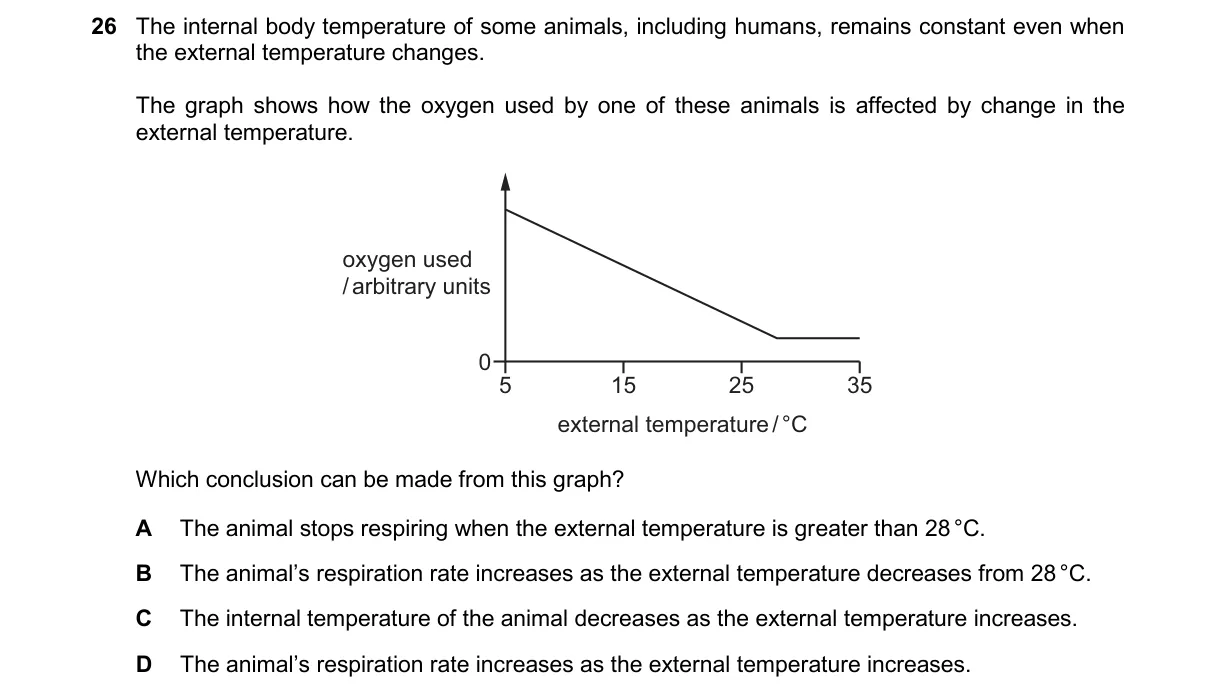
Answer choices
- AThe animal's respiration rate increases as the external temperature decreases from 28°C
- BThe internal temperature of the animal decreases as the external temperature increases.
- CThe animal's respiration rate increases as the external temperature increases.
- DThe animal's respiration rate decreases as the external temperature increases from 28°C
Explanation
Homeothermic Regulation and Oxygen Consumption
Steps:
- Identify the animal as homeothermic, maintaining constant internal temperature despite external changes.
- Note oxygen use reflects metabolic/respiration rate, which adjusts to regulate internal temperature.
- Analyze graph trends: assume it shows oxygen use rising below 28°C (heat generation) and stable or falling above (minimal regulation needed).
- Match trends to choices, eliminating contradictions to constant internal temperature.
Why B is correct:
- The graph implies regulatory failure; as external temperature rises, increased oxygen use signals compensatory cooling, but constant internal temperature requires stable metabolism, revealing a decrease per homeothermic definition.
Why the others are wrong:
- A: Graph likely shows increase below 28°C for heat production, not general decrease response.
- C: Above thermoneutral zone (28°C), respiration typically stabilizes, not increases.
- D: Respiration may decrease slightly above 28°C to avoid overheating, contradicting graph's implied rise.
Not enough information: Graph not provided, making precise trends ambiguous. Final answer: B
Topic: Temperature control
Practice more O Levels/IGCSE Biology (5090) questions on mMCQ.me