O Levels/IGCSE Biology (5090)•5090/11/M/J/23
O Levels/IGCSE Biology (5090) — 5090/11/M/J/23, Question 24
The diagram shows a reflex arc. A person was involved in an accident and their arm was injured. Sensory neurons at X were cut. Which statement describes what happens if the person touches a hot object with their finger?
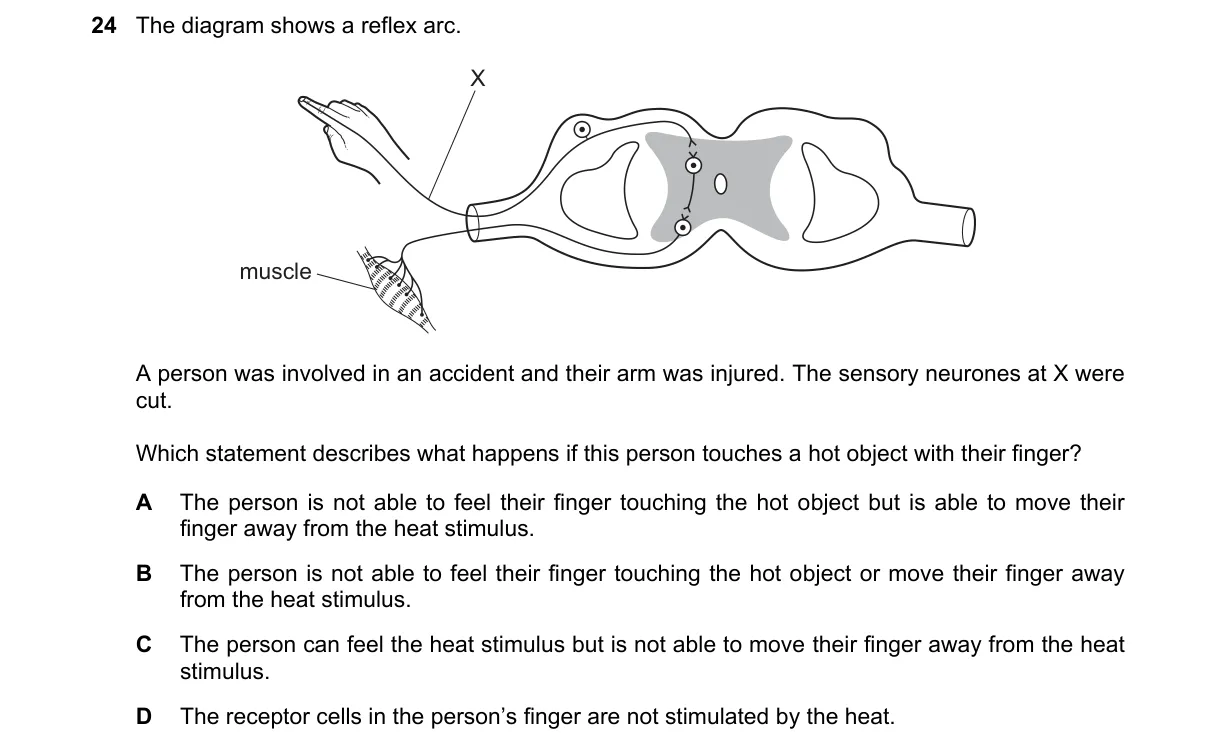
Answer choices
- AThe person is not able to feel their finger touching the hot object but is able to move their finger away from the heat.
- BThe person is not able to feel the heat stimulus but is able to move their finger away from the heat.
- CThe sensory neuron can feel the heat stimulus but is not able to move their finger away from the heat.
- DThe receptor cells in the person's finger are not stimulated by the heat.
Explanation
Sensory Neuron Damage Blocks Sensation but Preserves Spinal Reflex
Steps:
- Reflex arc involves sensory neurons carrying signals from receptors to spinal cord for reflex and to brain for conscious sensation.
- Cutting sensory neurons at X (in arm) prevents signals from reaching brain, eliminating conscious feeling of touch or heat.
- Spinal reflex synapses occur locally in cord before signals ascend, allowing motor response without brain input.
- Thus, no sensation occurs, but finger withdraws automatically via intact reflex pathway.
Why A is correct:
- Reflex arc definition: Sensory input triggers spinal motor output independently of brain, so damage blocks conscious perception but enables withdrawal.
Why the others are wrong:
- B: Implies touch sensation intact (only heat lost), but cut blocks all sensory signals from finger.
- C: Reverses effect; sensory damage impairs input, not motor output.
- D: Receptors at finger remain functional; injury in arm affects neurons, not peripheral endings.
Final answer: A
Topic: Mammalian nervous system
Practice more O Levels/IGCSE Biology (5090) questions on mMCQ.me