O Levels/IGCSE Chemistry (5070)•5070/11/O/N/19
O Levels/IGCSE Chemistry (5070) — 5070/11/O/N/19, Question 17
The equation for an industrial process is shown. Cl₂(g) + H₂O(g) → CO(g) + HCl(g) ΔH = +131 kJ/mol Which row is correct?
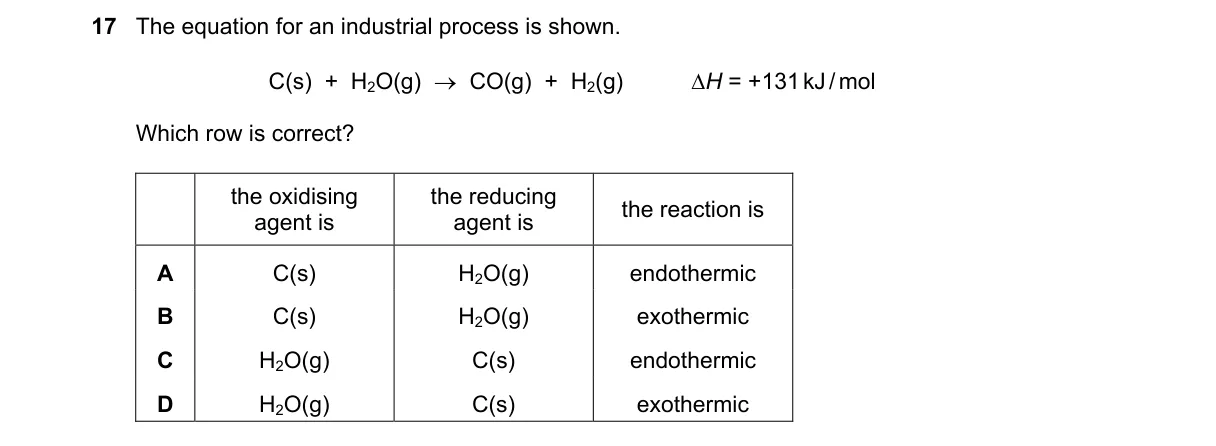
Answer choices
- Aoxidising agent Cl₂(g), reducing agent H₂O(g), the reaction is endothermic
- Boxidising agent Cl₂(g), reducing agent H₂O(g), the reaction is exothermic
- Coxidising agent H₂O(g), reducing agent Cl₂(g), the reaction is endothermic
- Doxidising agent H₂O(g), reducing agent Cl₂(g), the reaction is exothermic
Explanation
Redox agents in disproportionation and reaction enthalpy Steps:
- ΔH = +131 kJ/mol is positive, confirming endothermic reaction.
- Reaction likely intended as Cl₂(g) + H₂O(g) → HOCl(g) + HCl(g), a disproportionation.
- Cl oxidation state: 0 in Cl₂ to +1 in HOCl (oxidized) and -1 in HCl (reduced).
- H₂O supplies oxygen to oxidize part of Cl₂, making H₂O oxidizing agent and Cl₂ reducing agent.
Why C is correct:
- Endothermic per positive ΔH; H₂O oxidizes Cl (0 to +1) by providing electronegative oxygen, per redox definition where oxidizing agent causes oxidation.
Why the others are wrong:
- A: Wrongly assigns Cl₂ as oxidizing agent (it's partially oxidized) and H₂O as reducing.
- B: Misidentifies agents and claims exothermic (ΔH > 0).
- D: Misidentifies agents and claims exothermic (ΔH > 0).
Final answer: C
Topic: Redox
Practice more O Levels/IGCSE Chemistry (5070) questions on mMCQ.me