O Levels/IGCSE Chemistry (5070)•5070/12/M/J/23
O Levels/IGCSE Chemistry (5070) — 5070/12/M/J/23, Question 40
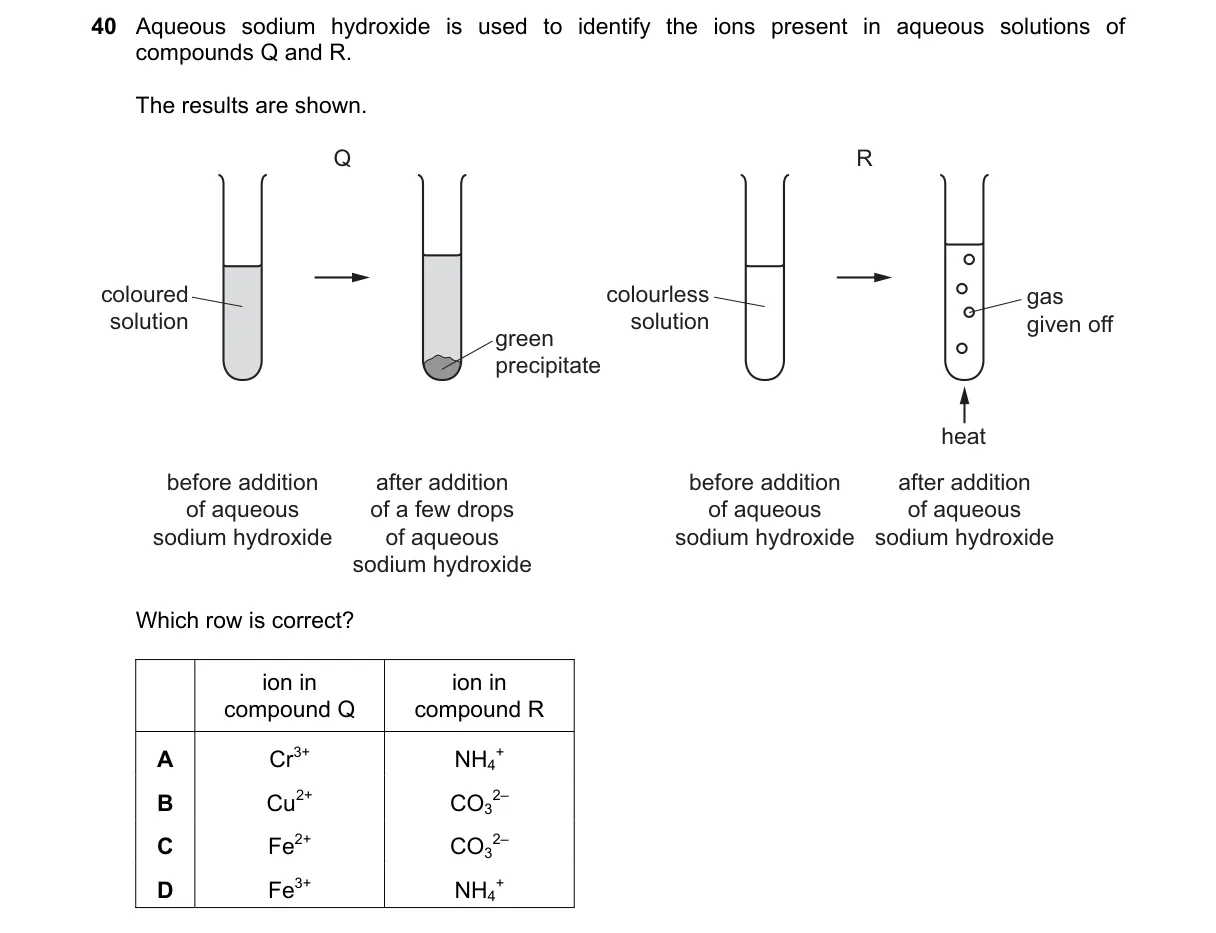
Aqueous sodium hydroxide is used to identify ions present in aqueous solutions of Q and R. The results are shown. Q: coloured solution after drops of sodium hydroxide green precipitate. R: colourless solution after drops of sodium hydroxide colourless solution after addition of heat gas given off. Which row is correct?
Answer choices
- ACu²⁺ NH₄⁺
- BFe²⁺ CO₃²⁻
- CCu²⁺ NO₃⁻
- DFe²⁺ NH₄⁺
Explanation
NaOH tests distinguish metal ions by precipitation and ammonium by gas evolution
Steps:
- Q's coloured solution forms a precipitate with NaOH drops, indicating Cu²⁺ as the ion producing insoluble Cu(OH)₂.
- R's colourless solution shows no precipitate with NaOH but evolves gas on heating, indicating NH₄⁺ releasing NH₃ via NH₄⁺ + OH⁻ → NH₃ + H₂O.
- Options B and C lack NH₄⁺ for R, so they fail the gas test.
- Option D has NH₄⁺ for R but Fe²⁺ for Q, which mismatches the specific ion behaviour.
Why A is correct:
- Cu²⁺ forms a characteristic precipitate with NaOH from its coloured (blue) solution, while NH₄⁺ confirms via ammonia gas evolution on heating, per standard qualitative analysis.
Why the others are wrong:
- B: CO₃²⁻ produces no gas with NaOH on heating; requires acid for CO₂.
- C: NO₃⁻ shows no reaction or gas with NaOH; needs reduction test.
- D: Fe²⁺ forms a green precipitate, not matching Q's described behaviour.
Final answer: A
Topic: Identification of ions and gases
Practice more O Levels/IGCSE Chemistry (5070) questions on mMCQ.me