O Levels/IGCSE Economics (2281)•2281/12/O/N/23
O Levels/IGCSE Economics (2281) — 2281/12/O/N/23, Question 25
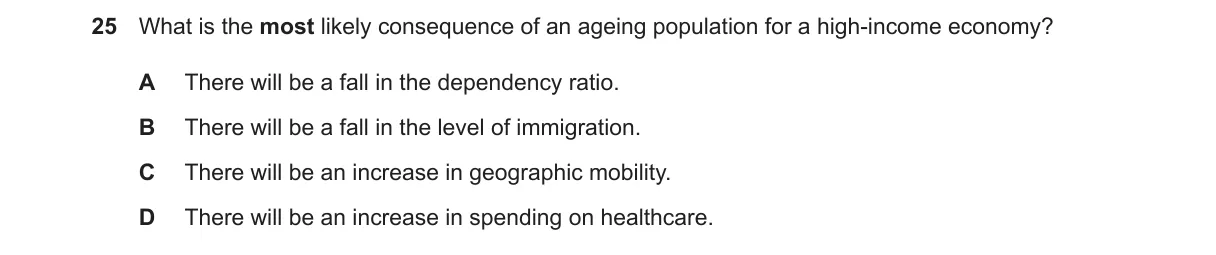
What is the most likely consequence of an aging population for a high-income economy?
Answer choices
- AThere will be a fall in the dependency ratio.
- BThere will be a fall in the level of immigration.
- CThere will be an increase in geographic mobility.
- DThere will be an increase in spending on healthcare.
Explanation
Aging Population Boosts Healthcare Costs
Steps:
- An aging population means a higher proportion of elderly people relative to working-age adults.
- Elderly individuals typically require more medical care due to age-related health issues.
- In high-income economies, advanced healthcare systems respond by allocating more resources to meet these needs.
- This leads to greater government and private spending on healthcare services.
Why D is correct:
- Aging populations increase the prevalence of chronic diseases and disabilities, directly raising healthcare expenditures as defined by demographic transition models.
Why the others are wrong:
- A: An aging population raises the dependency ratio by increasing the number of non-working elderly dependents.
- B: Aging often prompts higher immigration to offset labor shortages, not a fall.
- C: Older populations tend to have lower geographic mobility due to health limitations and settled lifestyles.
Final answer: D
Topic: Population
Practice more O Levels/IGCSE Economics (2281) questions on mMCQ.me