O Levels/IGCSE Economics (2281)•2281/12/O/N/23
O Levels/IGCSE Economics (2281) — 2281/12/O/N/23, Question 22
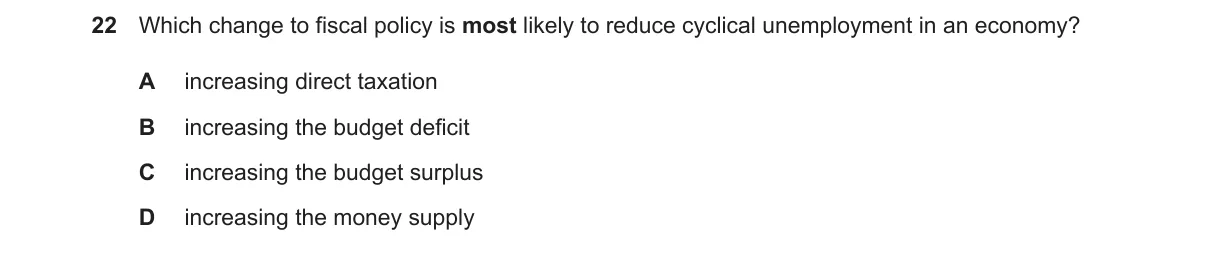
Which change in fiscal policy is most likely to reduce cyclical unemployment in an economy?
Answer choices
- Aincreasing direct taxation
- Bincreasing the budget deficit
- Cincreasing the budget surplus
- Dincreasing the money supply
Explanation
Expansionary fiscal policy stimulates demand to lower cyclical unemployment
Steps:
- Cyclical unemployment arises from insufficient aggregate demand during recessions.
- Fiscal policy adjusts government spending and taxation to influence demand.
- Expansionary fiscal policy increases demand by raising spending or cutting taxes.
- This shifts the aggregate demand curve rightward, boosting output and employment.
Why B is correct:
- Increasing the budget deficit via higher government spending or lower taxes directly expands aggregate demand, per the Keynesian multiplier effect, reducing cyclical unemployment.
Why the others are wrong:
- A: Increasing direct taxation reduces disposable income and aggregate demand, worsening cyclical unemployment.
- C: Increasing the budget surplus through spending cuts or tax hikes contracts aggregate demand, raising unemployment.
- D: Increasing the money supply is monetary policy, not fiscal, and primarily affects interest rates rather than direct government budget actions.
Final answer: B
Topic: Fiscal policy
Practice more O Levels/IGCSE Economics (2281) questions on mMCQ.me