O Levels/IGCSE Economics (2281)•2281/13/O/N/22
O Levels/IGCSE Economics (2281) — 2281/13/O/N/22, Question 25
Which combination of government actions is most likely to raise the living standards of lower income groups in economy?
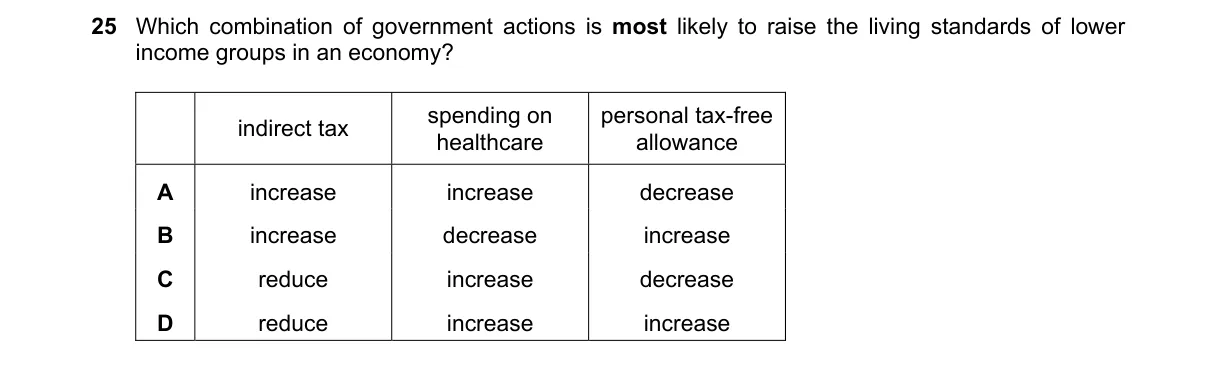
Answer choices
- AIncrease indirect tax, decrease health spending, decrease personal tax-free allowance
- BIncrease indirect tax, increase health spending, increase personal tax-free allowance
- CReduce indirect tax, increase health spending, decrease personal tax-free allowance
- DReduce indirect tax, increase health spending, increase personal tax-free allowance
Explanation
Progressive fiscal policies for low-income equity
Steps:
- Reducing indirect taxes lowers prices on essentials like food and fuel, easing the regressive burden on low-income households.
- Increasing health spending improves public healthcare access, vital for low-income groups unable to afford private options.
- Raising personal tax-free allowances shields low earners from income tax, boosting their disposable income.
- Option D uniquely combines all three actions to maximize benefits for lower income groups.
Why D is correct:
- It applies progressive taxation principles by reducing regressive indirect taxes (disproportionately affecting the poor) while enhancing public goods and tax relief, directly increasing real income and welfare per economic equity definitions.
Why the others are wrong:
- A: All actions (higher indirect taxes, cut health spending, lower allowances) increase costs and reduce services for low-income.
- B: Higher indirect taxes impose a regressive burden that offsets health and allowance gains.
- C: Lowering tax-free allowances raises income taxes on low earners, negating other benefits.
Final answer: D
Topic: Living standards
Practice more O Levels/IGCSE Economics (2281) questions on mMCQ.me