O Levels/IGCSE Economics (2281)•2281/12/O/N/22
O Levels/IGCSE Economics (2281) — 2281/12/O/N/22, Question 13
The central bank of a country decreases interest rates to help the economy out of a recession. How is this decrease in interest rates most likely to affect the levels of saving and borrowing from this country's commercial banks?
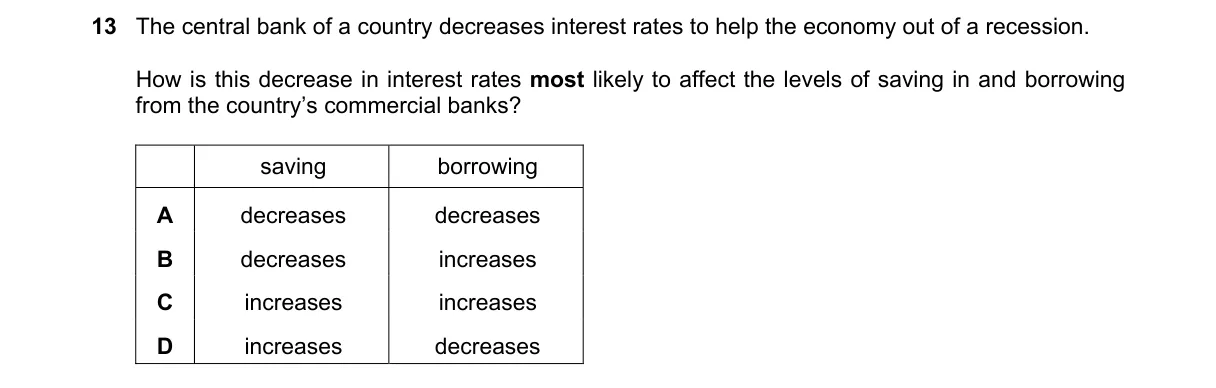
Answer choices
- Asaving: decreases, borrowing: decreases
- Bsaving: decreases, borrowing: increases
- Csaving: increases, borrowing: decreases
- Dsaving: increases, borrowing: increases
Explanation
Lower interest rates reduce incentives to save and costs to borrow
Steps:
- Central bank cuts interest rates, lowering returns on deposits.
- Savers earn less interest, decreasing saving levels.
- Borrowers face lower loan costs, increasing borrowing demand.
- This stimulates economic activity during recession.
Why B is correct:
- Lower interest rates raise the opportunity cost of saving (less reward) while reducing the cost of borrowing, per basic interest rate theory in macroeconomics.
Why the others are wrong:
- A: Borrowing increases, not decreases, due to cheaper loans.
- C: Saving decreases, not increases, from lower returns.
- D: Saving decreases, not increases, as rewards fall.
Final answer: B
Topic: Monetary policy
Practice more O Levels/IGCSE Economics (2281) questions on mMCQ.me