O Levels/IGCSE Economics (2281)•2281/13/O/N/21
O Levels/IGCSE Economics (2281) — 2281/13/O/N/21, Question 11
The equilibrium wage is $10 per hour. What explains why the wage rate is actually $12 per hour?
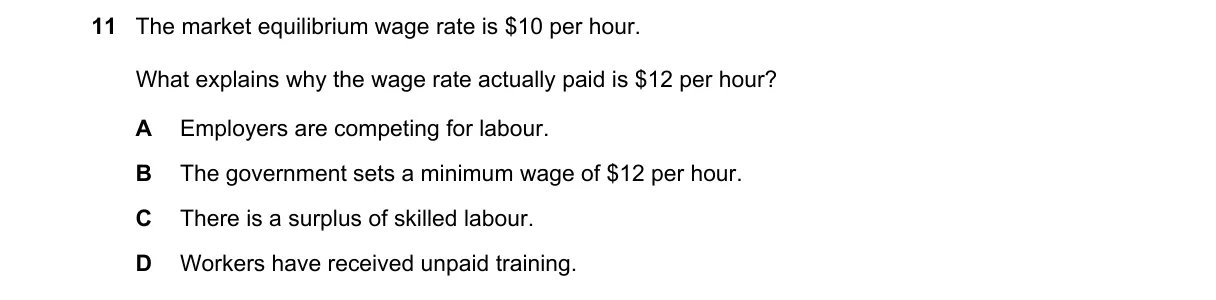
Answer choices
- AEmployers are competing for labor.
- BThere is a surplus of skilled labour.
- CThe government sets minimum wage of $12 per hour.
- DWorkers have received unpaid training.
Explanation
Wage Above Equilibrium Due to Minimum Wage Law
Steps:
- Equilibrium wage of $10 means labor supply equals demand at that rate.
- Actual wage of 10.
- A binding minimum wage sets the floor at $12, creating labor shortage but enforcing higher pay.
- This intervention explains the deviation without shifting supply or demand curves.
Why C is correct:
- Minimum wage acts as a price floor above equilibrium, legally requiring wages at $12 and causing the observed rate.
Why the others are wrong:
- A: Employer competition increases labor demand, raising equilibrium wage to 10.
- B: Surplus of labor (supply > demand) pushes wages below equilibrium to $10 or lower, not above.
- D: Unpaid training reduces worker costs, shifting supply right and lowering equilibrium wage, not raising actual wage.
Final answer: C
Topic: Price determination
Practice more O Levels/IGCSE Economics (2281) questions on mMCQ.me