O Levels/IGCSE Economics (2281)•2281/13/O/N/19
O Levels/IGCSE Economics (2281) — 2281/13/O/N/19, Question 25
Botswana, better healthcare has meant that birth rates have been faster than death rates. Also the number of children born, on average, to each woman has fallen from 6.3 to 3.2. What may be concluded from this information?
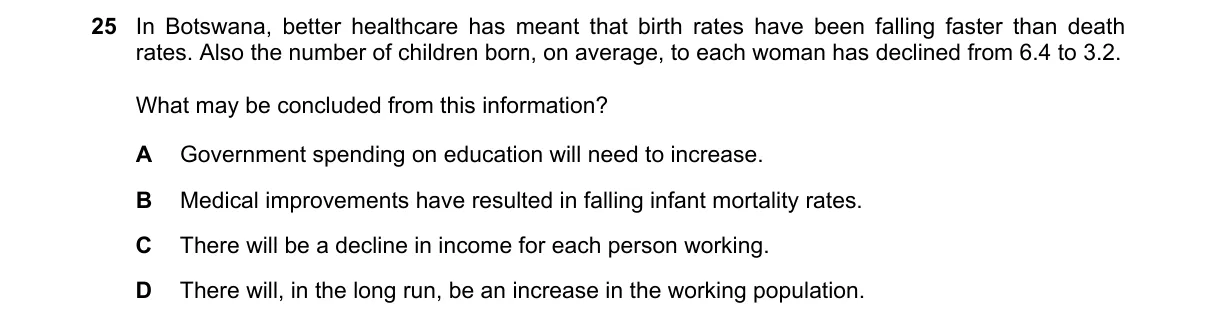
Answer choices
- AGovernment spending on education will increase.
- BMedical improvements have resulted in falling infant mortality rates.
- CThere will be a decline in income per person working.
- DThere will, in the long run, be an increase in the working population.
Explanation
Healthcare's Impact on Demographic Rates
Steps:
- Better healthcare lowers death rates, including infant mortality, outpaced by stable or higher birth rates initially.
- This creates natural population growth as births exceed deaths.
- Declining fertility from 6.3 to 3.2 children per woman signals a shift to smaller families, common after mortality improvements.
- Overall, this reflects the demographic transition stage where health advances reduce child deaths, encouraging fewer births.
Why B is correct:
- In demographic transition theory, medical improvements first lower death rates (e.g., infant mortality) before birth rates fall, directly explaining the given trends.
Why the others are wrong:
- A: No data links healthcare to education spending changes.
- C: Population growth could boost productivity and income per worker, not decline it.
- D: Long-term aging from low fertility may shrink the working population, not increase it.
Final answer: B
Topic: Population
Practice more O Levels/IGCSE Economics (2281) questions on mMCQ.me