O Levels/IGCSE Economics (2281)•2281/12/O/N/19
O Levels/IGCSE Economics (2281) — 2281/12/O/N/19, Question 25
In Botswana, better healthcare has meant that birth rates have been faster than death rates. Also the number of children born, on average, to each woman has declined from 6 to 3.2. What may be concluded from this information?
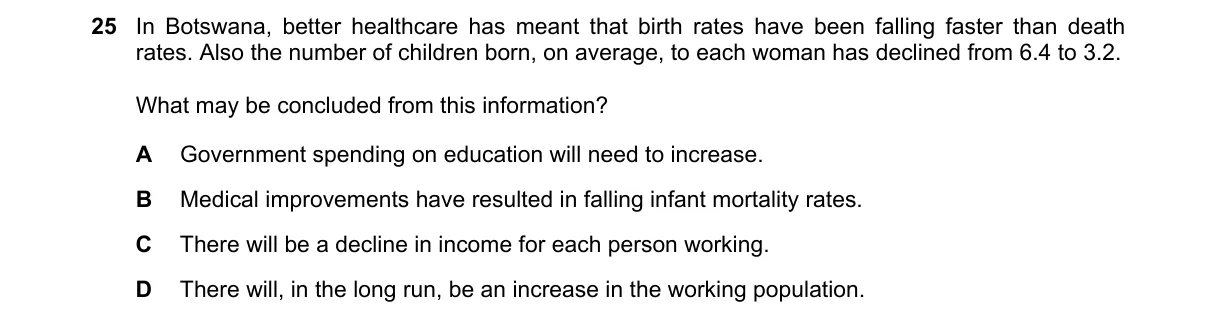
Answer choices
- AGovernment spending on education will increase.
- BMedical improvements have resulted in falling infant mortality rates.
- CThere will, in the long run, be an increase in the working population.
- DThere will be a decline in income per person working.
Explanation
Healthcare driving demographic changes in Botswana
Steps:
- Better healthcare increases life expectancy, making death rates lower than birth rates for population growth.
- Declining fertility from 6 to 3.2 children per woman indicates a shift toward smaller families.
- This pattern aligns with demographic transition theory, where health improvements first reduce mortality, then fertility follows.
- Falling infant mortality is a direct outcome of medical advancements, explaining the initial population surge.
Why B is correct:
- In demographic transition, stage 2 features declining death rates due to medical improvements like vaccinations and sanitation, which specifically lower infant mortality rates.
Why the others are wrong:
- A: No data links demographics to future education spending.
- C: Long-term working population depends on age structure, not guaranteed here.
- D: Income per worker relates to productivity, not directly to these rates.
Final answer: B
Topic: Population
Practice more O Levels/IGCSE Economics (2281) questions on mMCQ.me