O Levels/IGCSE Economics (2281)•2281/12/O/N/18
O Levels/IGCSE Economics (2281) — 2281/12/O/N/18, Question 26
Developing countries are sometimes given aid by charities and foreign governments. Which programme would least likely lead to long-term economic growth?
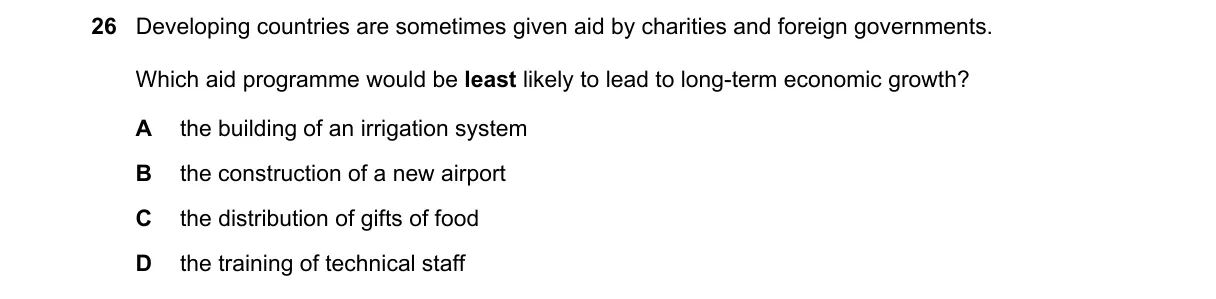
Answer choices
- Athe building of an irrigation system
- Bthe construction of a new airport
- Cthe distribution of gifts of food
- Dthe training of technical staff
Explanation
Aid's Impact on Sustainable Development
Steps:
- Identify long-term growth as sustained increases in productivity, infrastructure, and human capital.
- Evaluate each option: Does it create lasting assets or skills, or just temporary relief?
- Compare: Infrastructure and training build capacity; food aid addresses immediate needs without enduring benefits.
- Select the option that fails to enhance productive potential over time.
Why C is correct:
- Food distribution provides short-term consumption relief but does not increase productive capacity, per economic growth models like Solow, which emphasize capital accumulation over temporary aid.
Why the others are wrong:
- A: Irrigation systems boost agricultural productivity and output long-term.
- B: Airports improve trade, connectivity, and economic integration.
- D: Technical training enhances human capital, driving innovation and efficiency.
Final answer: C
Topic: Differences in economic development between countries
Practice more O Levels/IGCSE Economics (2281) questions on mMCQ.me