O Levels/IGCSE Economics (2281)•2281/11/M/J/24
O Levels/IGCSE Economics (2281) — 2281/11/M/J/24, Question 24
The introduction of a minimum hourly wage in an industry aims to reduce poverty among low-paid workers. What is an advantage to workers of an effective national minimum wage?
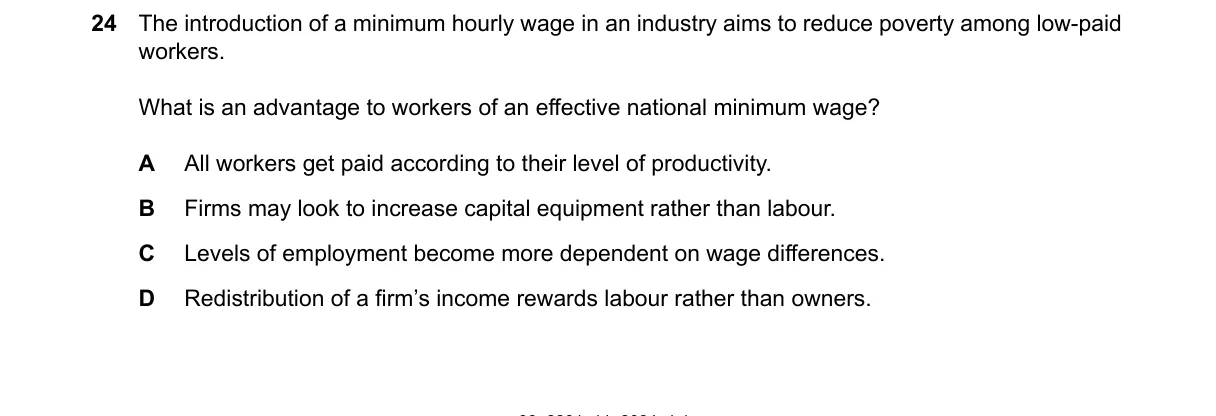
Answer choices
- AFirms may look to increase capital equipment rather than labour.
- BLevels of employment become more dependent on wage differences.
- CRedistribution of a firm's income rewards labour rather than owners.
- DOption D
Explanation
Minimum wage boosts low-paid workers' income
Steps:
- Recall minimum wage sets a legal floor on pay to combat poverty.
- Assess options for direct worker benefits versus firm responses.
- Eliminate A and B as they describe employer adjustments harming jobs.
- Confirm C shifts income but D provides core wage gain.
Why D is correct:
- Minimum wage law mandates higher pay for workers earning below the threshold, directly increasing their disposable income and reducing poverty.
Why the others are wrong:
- A: Encourages labor substitution, potentially reducing worker jobs.
- B: Implies employment ties to wage gaps, not a worker gain.
- C: Benefits labor broadly but doesn't specify low-paid workers' direct earnings rise.
Final answer: D
Topic: Poverty
Practice more O Levels/IGCSE Economics (2281) questions on mMCQ.me