O Levels/IGCSE Economics (2281)•2281/11/M/J/20
O Levels/IGCSE Economics (2281) — 2281/11/M/J/20, Question 25
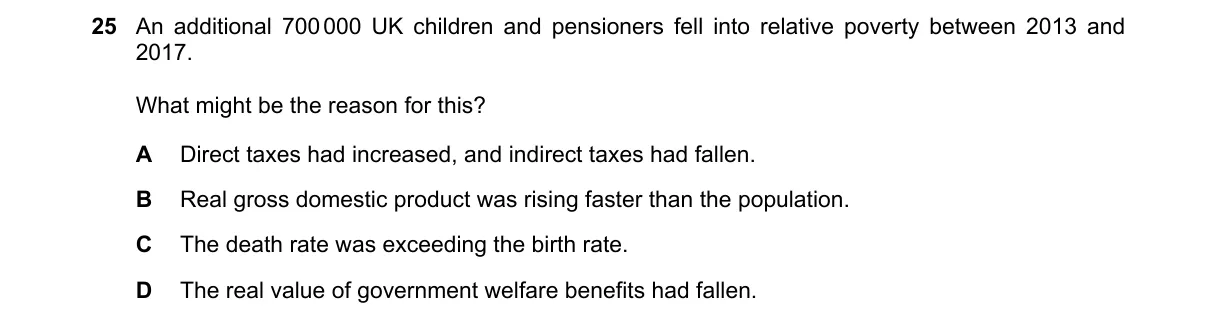
An additional 70000 UK children and pensioners fell into relative poverty between 2013 and 2017.
Answer choices
- ADirect taxes had increased, indirect taxes had fallen.
- BReal gross domestic product was rising faster than the population.
- CThe death rate exceeded birth rate.
- DThe real value of government welfare benefits had fallen.
Explanation
Relative poverty rises when benefits lag median income
Steps:
- Define relative poverty as income below 60% of median household income.
- Identify vulnerable groups: children and pensioners often rely on government welfare benefits.
- Assess changes: falling real value of benefits means they don't keep pace with median income growth.
- Conclude: this pushes more recipients below the poverty threshold, explaining the increase.
Why D is correct:
- Relative poverty measures income against the median; declining real benefits reduce disposable income for welfare-dependent groups, directly increasing poverty rates per the UK's official definition.
Why the others are wrong:
- A: Tax changes affect overall income distribution but not specifically welfare-dependent children and pensioners.
- B: Faster GDP growth raises median income, which would widen the poverty gap, not cause more to fall into it.
- C: Demographic shifts like higher death rates don't directly impact relative poverty thresholds or incomes.
Final answer: D
Topic: Poverty
Practice more O Levels/IGCSE Economics (2281) questions on mMCQ.me