O Levels/IGCSE Economics (2281)•2281/11/M/J/19
O Levels/IGCSE Economics (2281) — 2281/11/M/J/19, Question 20
In Uganda, the rate of inflation fell from 5% in 2014 to 2% in 2015. Which conclusion can be drawn from this?
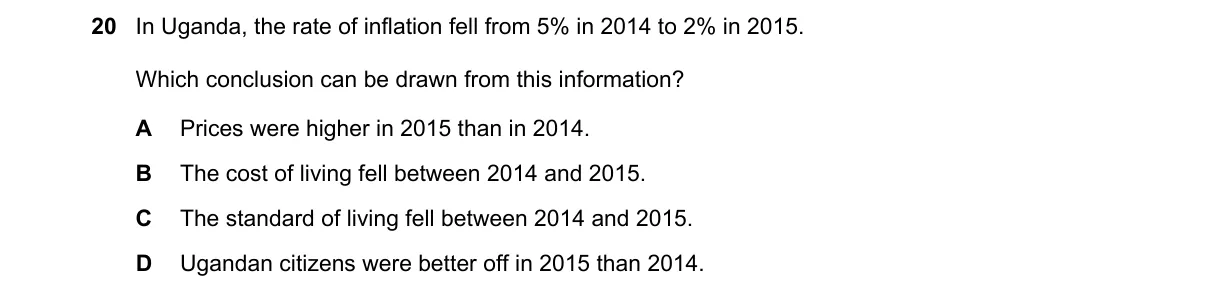
Answer choices
- APrices were higher in 2015 than 2014.
- BThe standard of living fell between 2014 and 2015.
- CThe cost of living fell between 2014 and 2015.
- DUgandan citizens were better off in 2015 than 2014.
Explanation
Inflation rate measures price level changes
Steps:
- Inflation rate is the percentage increase in average prices over a year.
- A 5% rate in 2014 means prices rose 5% from 2013 to 2014.
- A 2% rate in 2015 means prices rose 2% from 2014 to 2015.
- Positive inflation, even if lower, confirms prices increased overall.
Why A is correct:
- By definition, a 2% inflation rate means the price level rose 2% from 2014 to 2015, so prices were higher in 2015.
Why the others are wrong:
- B: Lower inflation suggests slower price rises, not a fall in living standards; other factors like income growth matter.
- C: Cost of living rose with 2% inflation, though more slowly than before.
- D: Lower inflation helps purchasing power, but no data on wages or other economic factors to confirm citizens were better off.
Final answer: A
Topic: Inflation and deflation
Practice more O Levels/IGCSE Economics (2281) questions on mMCQ.me